Bealljegoahti (no.12) – a curved pole hut
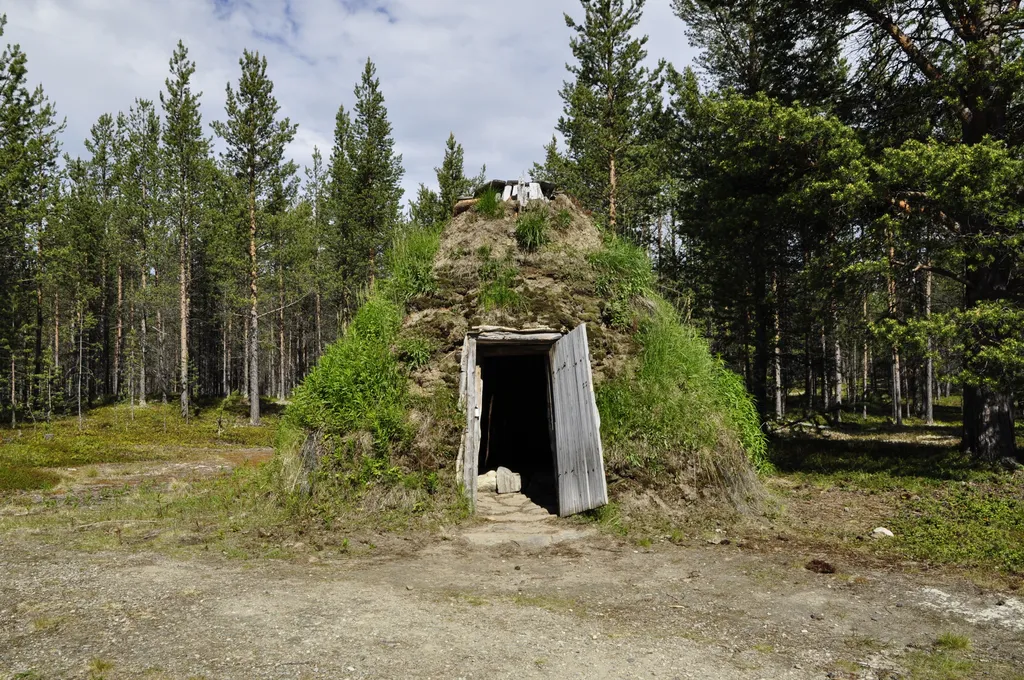
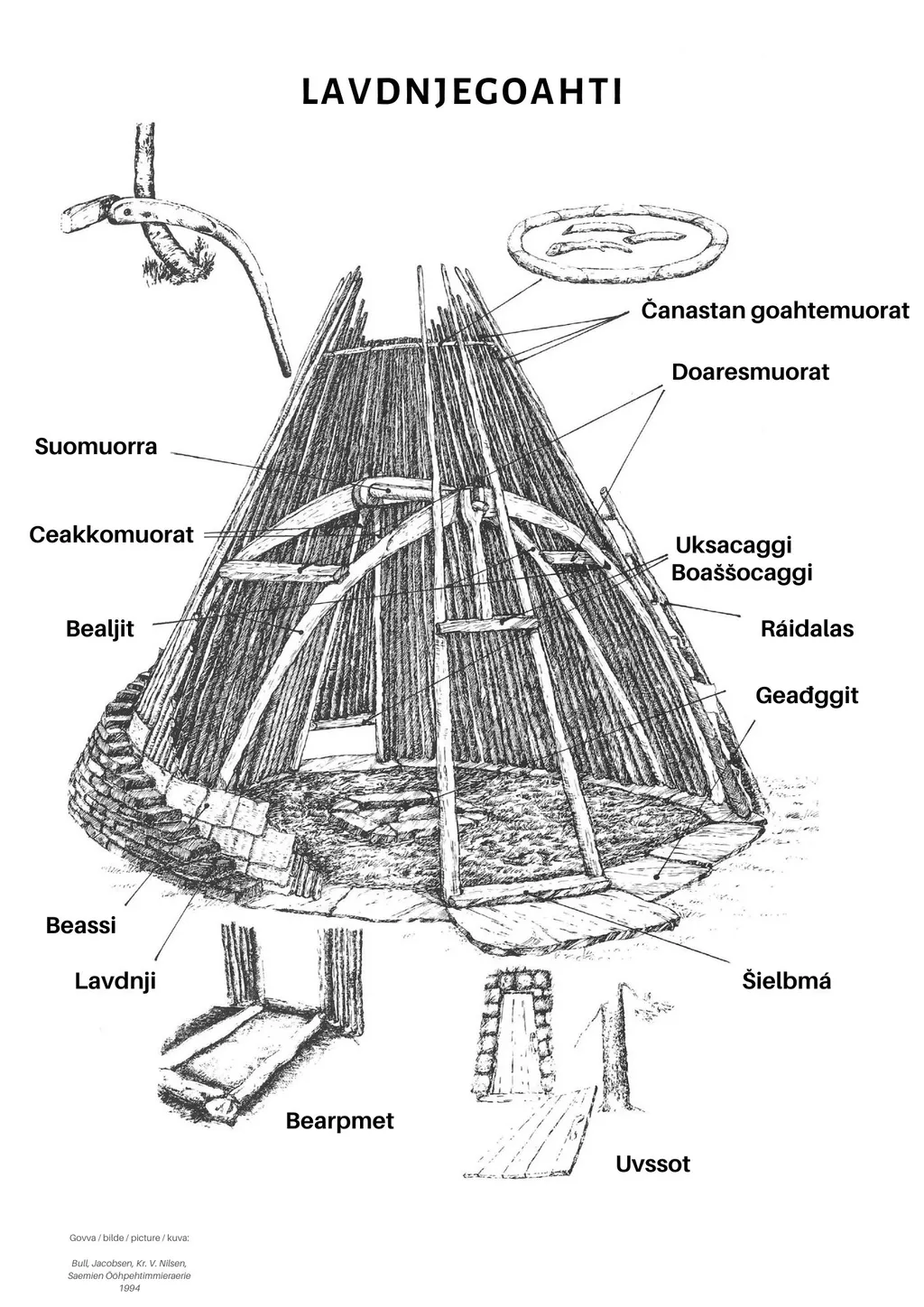
The annual migrations determined by seasonal hunting and fishing required functional dwellings and structures. These dwellings were either permanent or movable. Curved pole turf huts – called bealljegoahti or lavdnjegoahti in Sámi – were made from a wooden frame covered with birch bark and blocks of turf. The curved pole hut is one of the oldest types of building in the North. Turf huts were originally cone-shaped. In earlier times, turf huts were sometimes partly dug into the ground. If the turf hut was a permanent structure, storerooms would be built around it. These were designed in such a way that animals could not get into them.
Bealljegoahti in the Open-air Museum
This bealljegoahti was built in 1977 by Jon Ole Andersen and Nils Turi. In 1986 the turf hut accidentally burned down, but another was built in 1987 by Jon Ole Andersen and Thorolf Bjørnback.
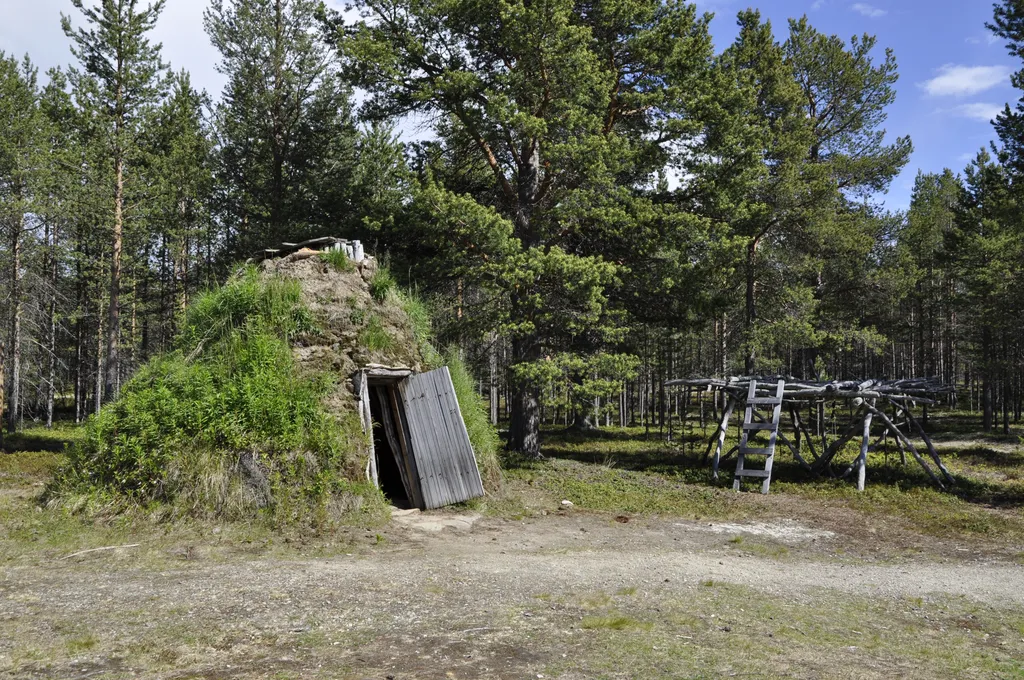
Sámi dwellings
Bealljegoahti can be a permanent dwelling, like the one on the museum site, or a movable one that is on display in the main exhibition inside the museum. Both the movable and permanent bealljegoahti are constructed with four curved poles that bend to an angle of about a 130°, a long centre pole and ten or twelve straight poles. When this structure is set up, a four-legged stand is formed with the long pole at the top and centre of the structure. The straight “wall-poles” are laid up against the structure.
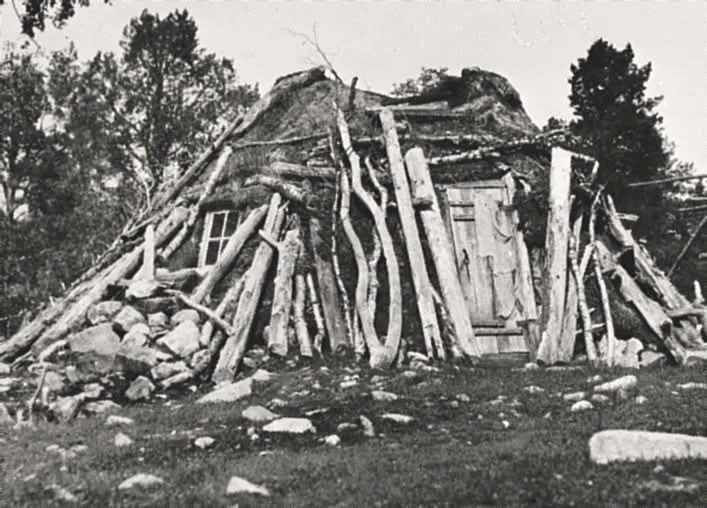
The permanent bealljegoahti is covered with birch bark and blocks of turf, the movable one is covered with stout fabric.
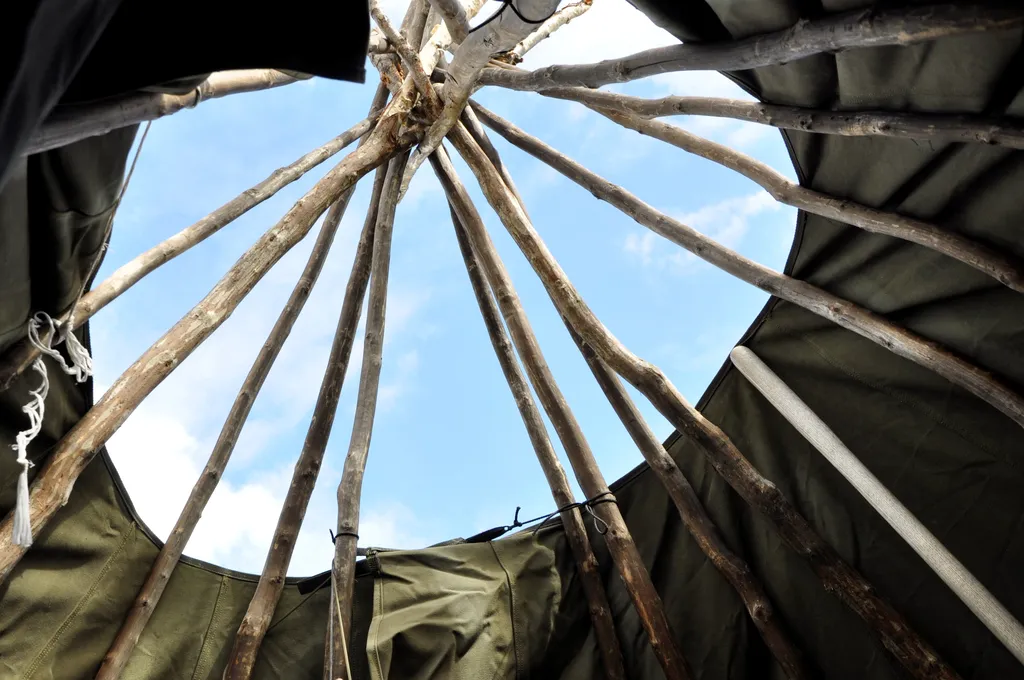
A simple movable traditional Sámi tent is called lávvu. It is built around three poles that are tied together at the top. The poles are spread form a tripod against around which additional poles are placed forming a conical structure covered with stout fabric. This is the prototype for the permanent turf huts and movable tents. Fewer poles are used if the tent is often moved.
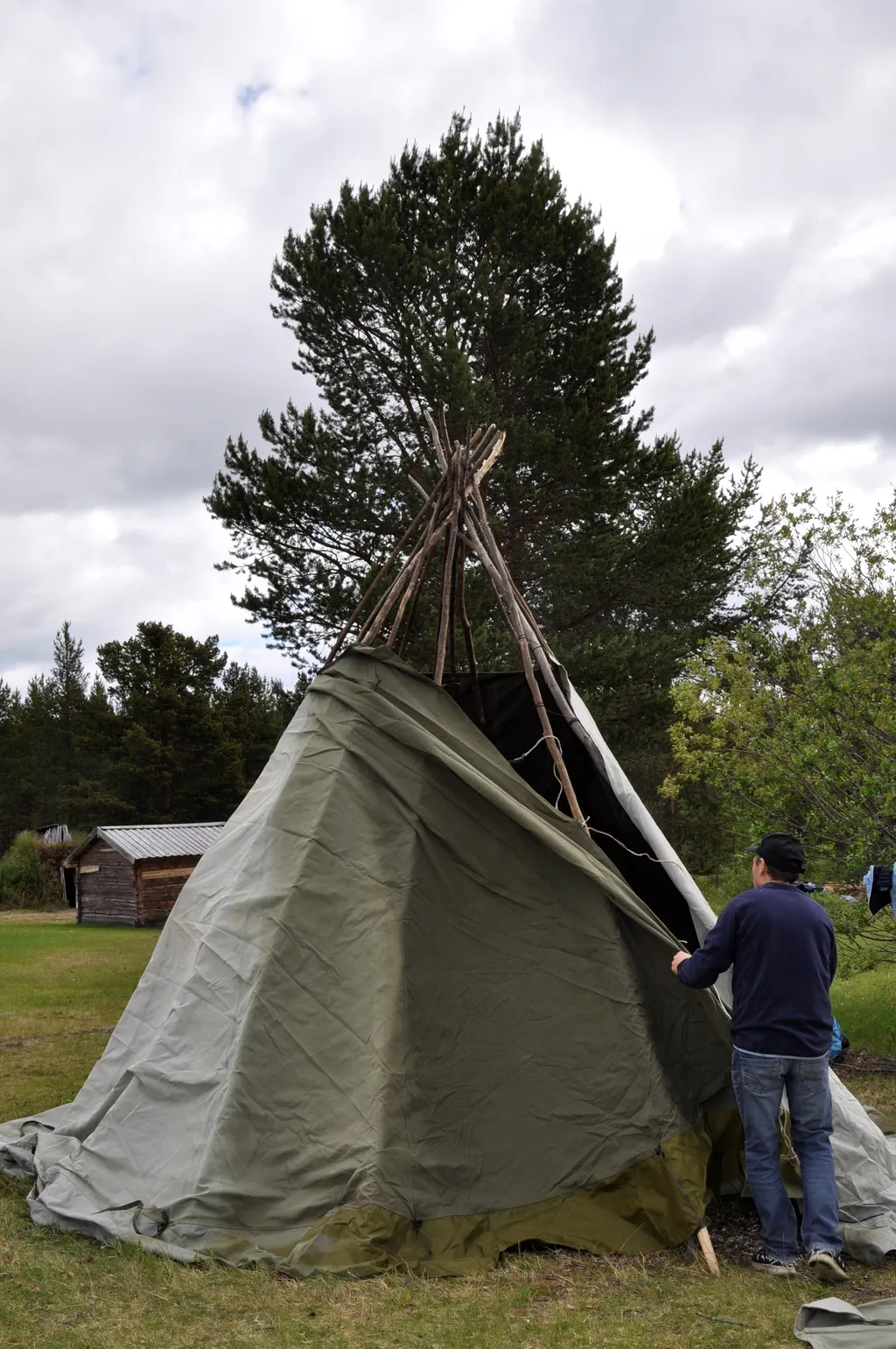
The differences in construction between the curved pole hut and the tent can be seen when looking at the top of the structures. A lávvu will have its poles coming together, while the poles of a bealljegoahti will be separted.
Transportation
Traditionally, the Sámi transported their movable tents from one place to another while following their reindeer herd. The whole tent structure was disassembled and transported with the help of the domesticated reindeer used as a pack animals to carry or drag the poles. The reindeer were well equipped, but the way poles and other items were packed and transported depended on whether it was summer or winter.

Traditionally women were in charge of the poles that were tied to the back of a specific reindeer. This reindeer was placed last line of reindeer. The lead reindeer was called láidesteaddji, the pathfinder. The láidesteaddji would also carry a newborn baby on its back, safe inside its cradle (gietkka). The gietkka is a traditional protective baby-carrier. Older children could ride on top of the reindeer when they got tired of walking. During the winter the line of reindeer would be equipped with sleds.
Living in a bealljegoahti
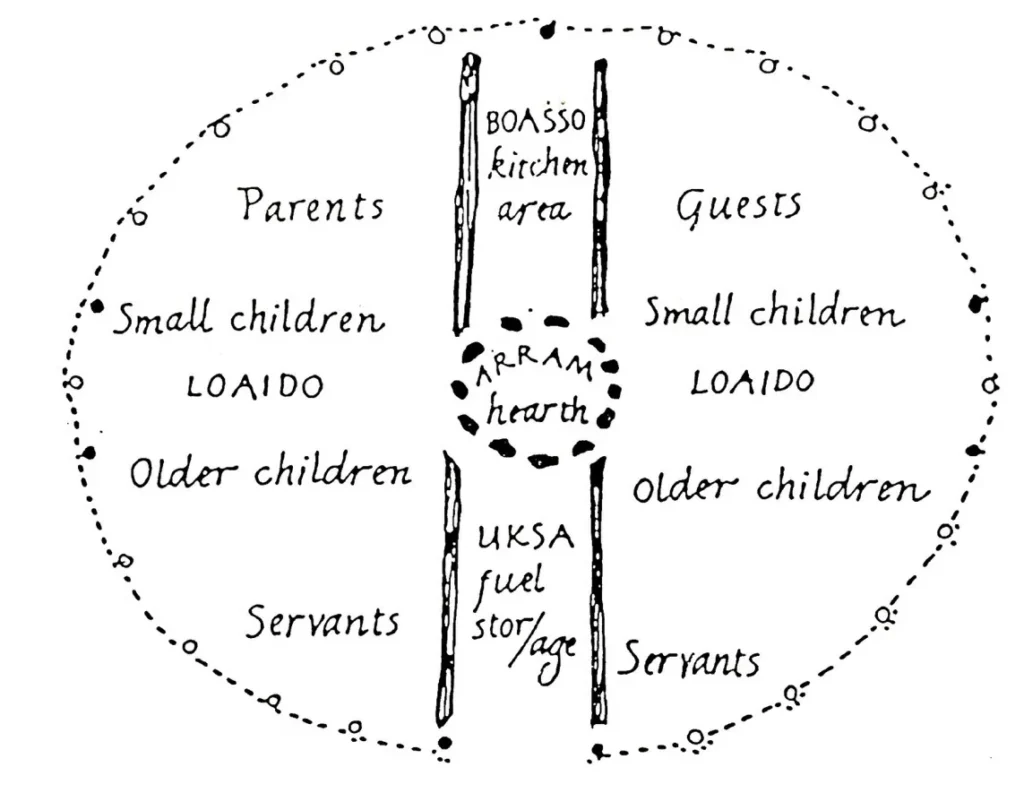
Certain rules had to be observed inside a bealljegoahti because of its limited space. It was forbidden to step over the kitchen and the hearth areas, since they were considered to be sacred. Also poking the fire for fun was considered disrespectful and forbidden. Children were told that if they poked the fire reindeer calves would be born blind.
Inside the goahti there was a strict seating plan. The back, beside the sacred boaššu, was reserved for the parents. Beside them were the babies and youngest children followed by the older children. Guests, non-family helpers and dogs sat nearest to the door. Special guests, a good friend of the parents, could be invited to sit beside the parents.
Sámi beliefs
Not only people inhabited bealljegoahti. Three female gods were believed to live there too, Sáráhkká, Uksáhkká and Juksáhkka. Sáráhkká lived in the hearth, Uksáhkká near the door and Juksáhkka in the kitchen area. These goddesses especially protected women and children. Sáráhkká was the goddess of pregnancy, for both humans and animals. She helped pregnant women and was present at birth. Sáráhkká was the protector of home and family. Unborn children were believed to be sent by Máttáráhkká, the mother of these female gods. If an unborn child developed into a girl, Sáráhkká took care of it. If it became a boy it was turned over to Juksáhkka, also known as the bow goddess. Uksáhkká, the door goddess, protected all small children and helped women during menstruation. It was important to offer coffee or food leftovers to these female gods, especially to Sáráhkká. Sámi people had great confidence in her.
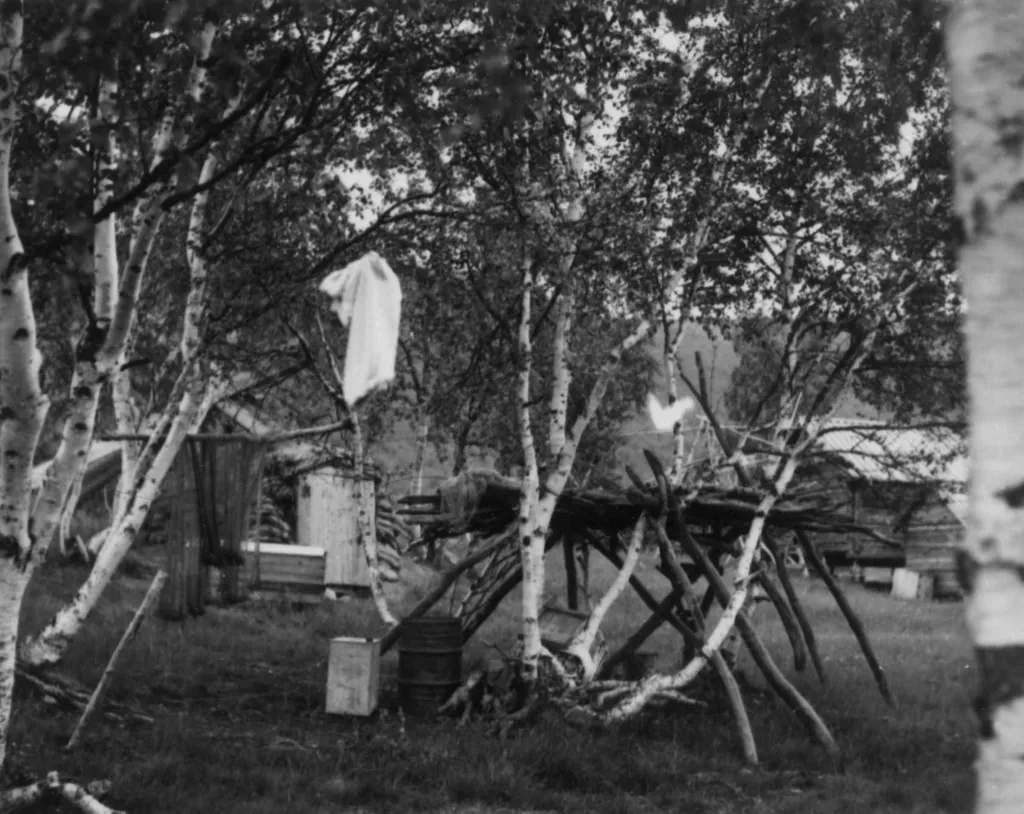
Njalla, a small storehouse (no. 13)
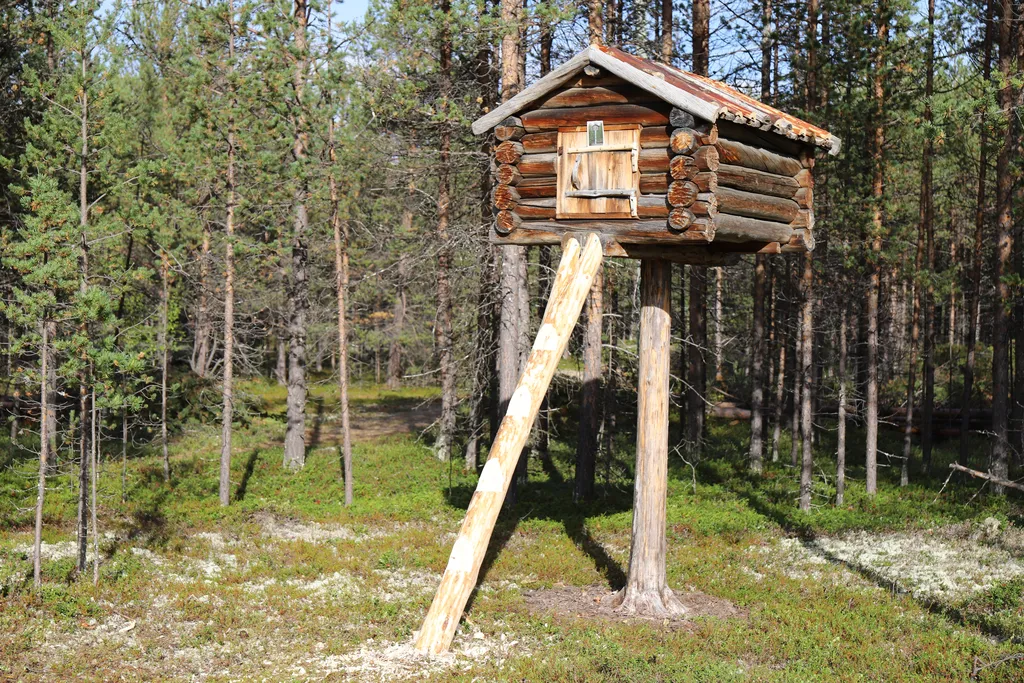
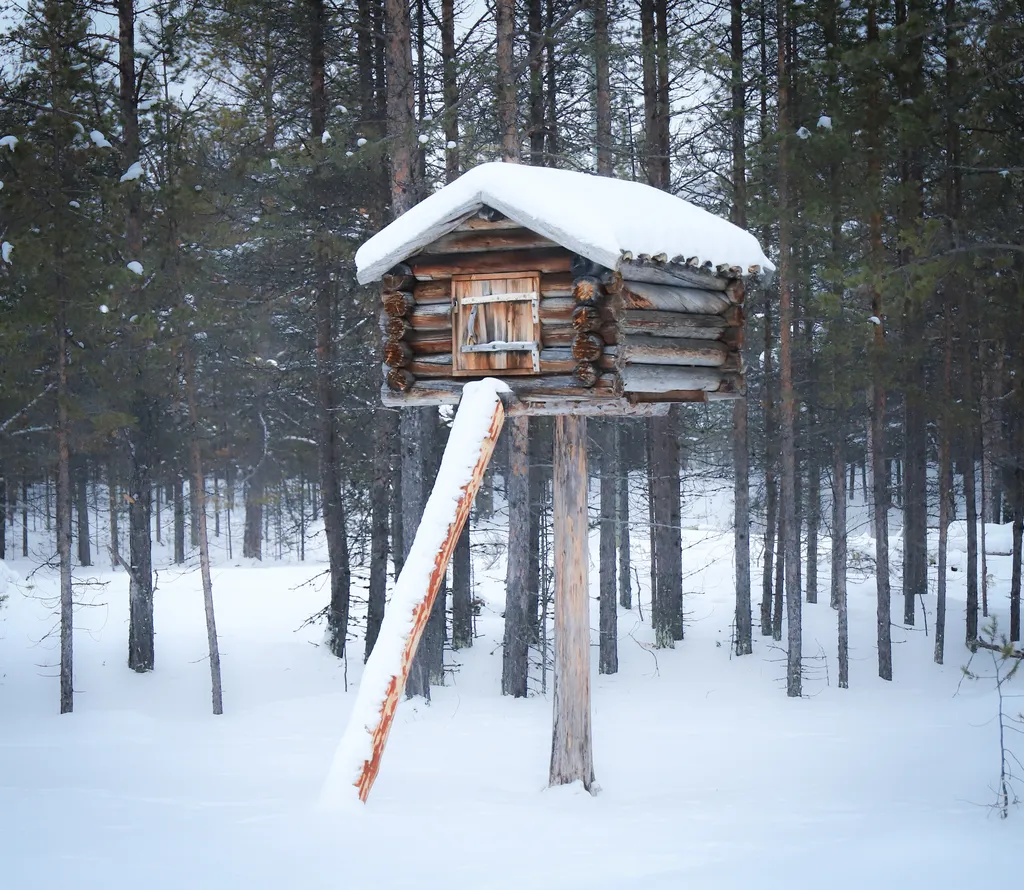
Njalla is a small storehouse on top of a wooden pole. The pole is about 2–3 meters long. It is small but practical and elevated over the ground to prevent wild animals getting to the food kept inside. In autumn, meat and other products were stored there for the winter and the following spring. Leather and other expensive items could also be kept there. The thick tree trunk with notches cut into it could serve as steps up to the storehouse or a ladder could be used and taken down to prevent wild animals climbing up.
This njalla became part of the Open-air Museum in 1976–1977. It was built by Lásse-Jon Niillás, Nils Turi, a traditional handicraft man from Karasjok.
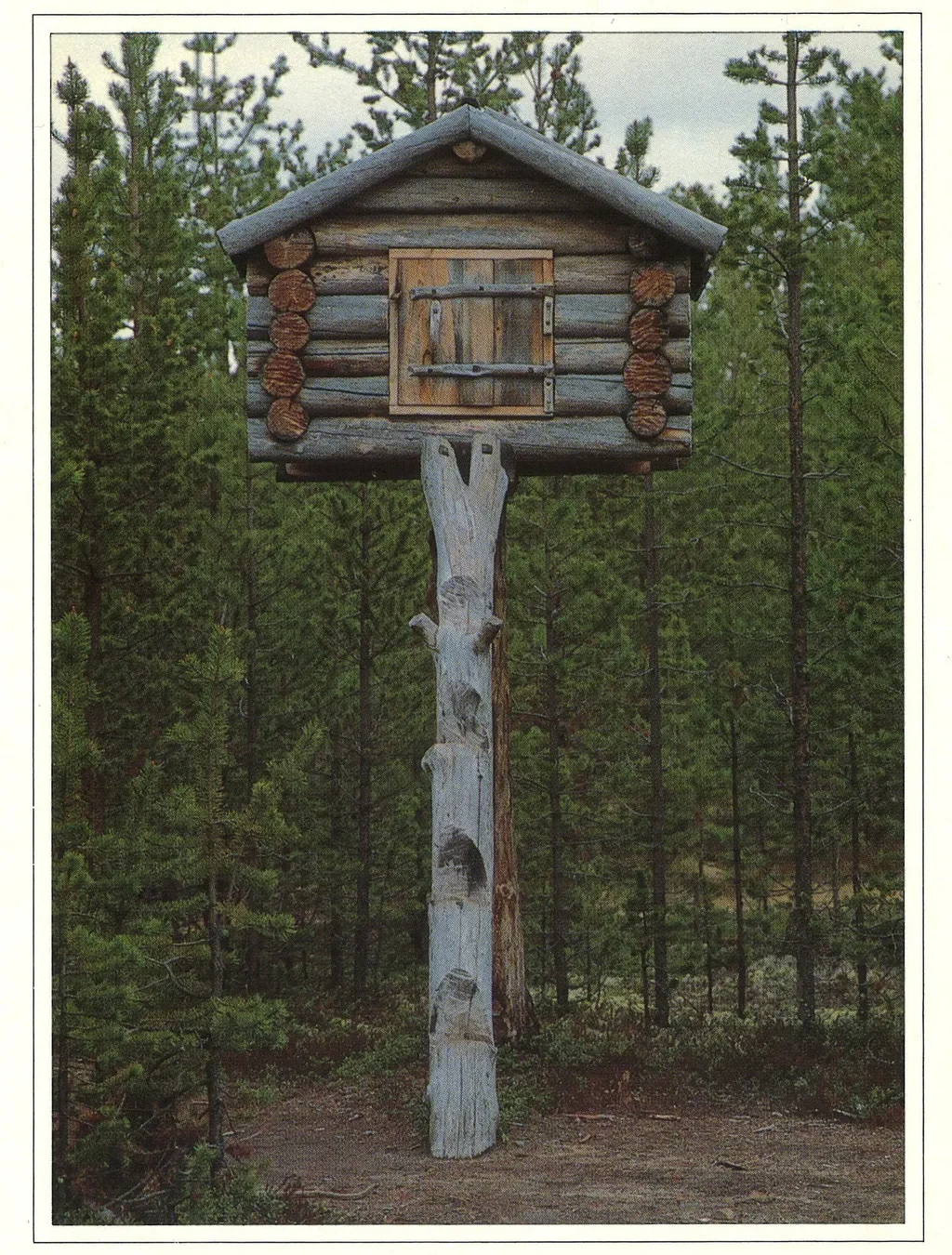
It has been restored twice, in 2014–2015 and 2018–2020. Restoration was done using traditional techniques and materials while respecting its original character. Restoration was undetaken by museum technician Bror Ivar Salamonsen with the assistance of pupils from the vocational school in Karasjok. The restored storehouse was placed in the Open-air Museum in August 2020.
Luovvi (no. 14) – Scaffolding for bigger items, provisions and hay
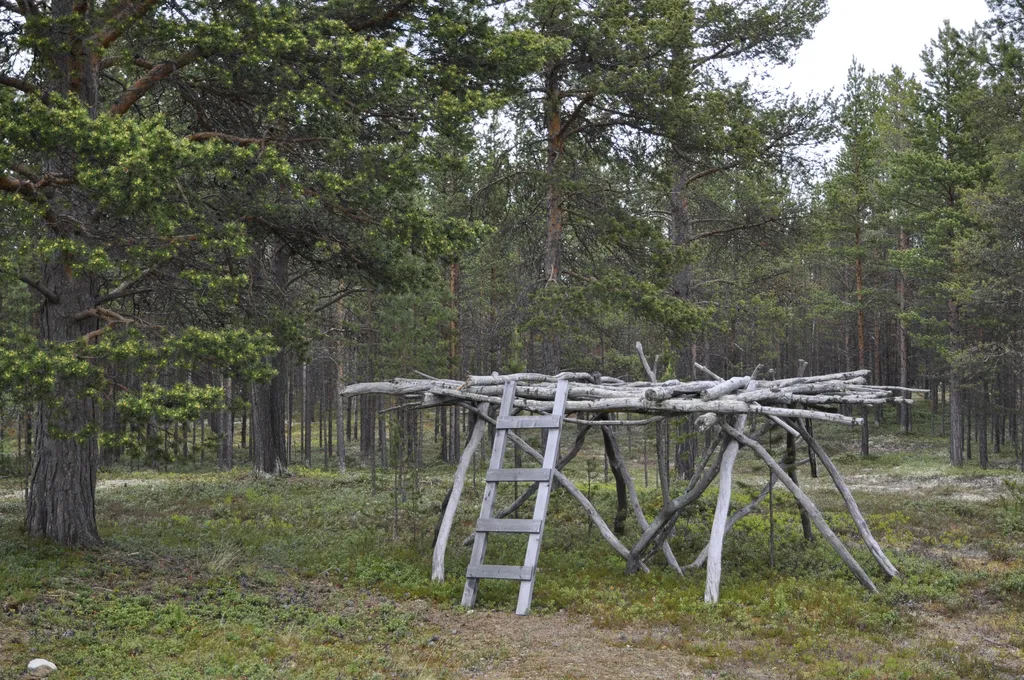
Luovvi is a wooden scaffolding with a floor for storing larger items, sleds, sleighs, clothing and other things when families moved from one place to another. Luovvi constructions were especially used by reindeer herders, who built these wooden constructions on their migration routes from winter pastures to summer places. Sámi farmers also used them for storage at their fishing and hunting grounds.
A luovvi is made from birch, which had been dried well beforehand.
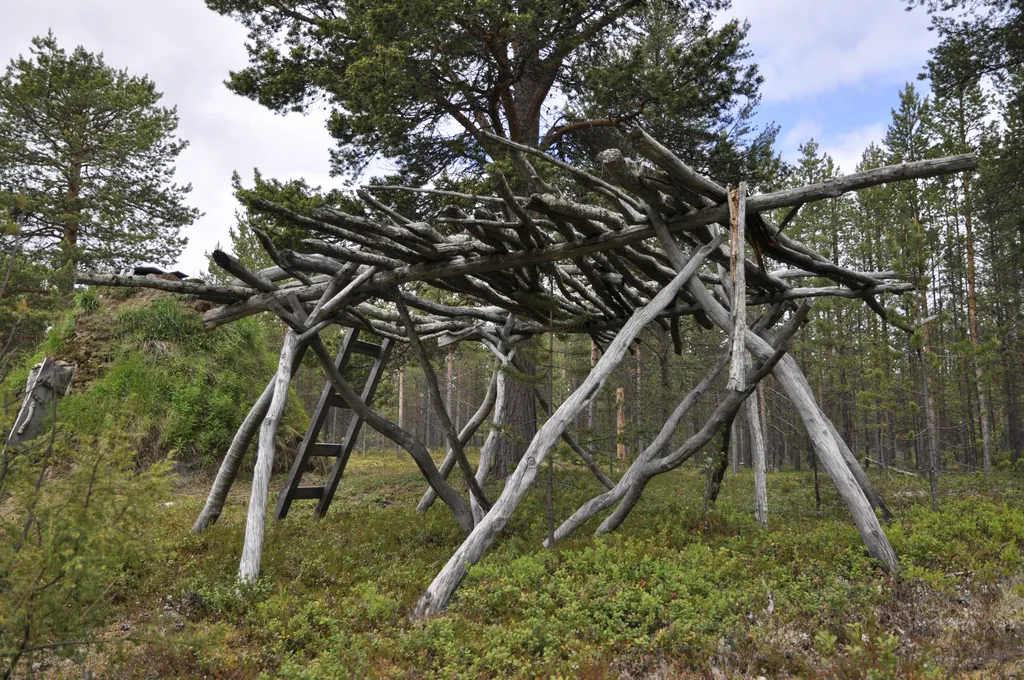
A luovvi had a wooden platform about 2 metres above the ground. It stood on four wooden poles on top of which were layed wooden poles.