
A Farm From Jávrebainjárga (1)
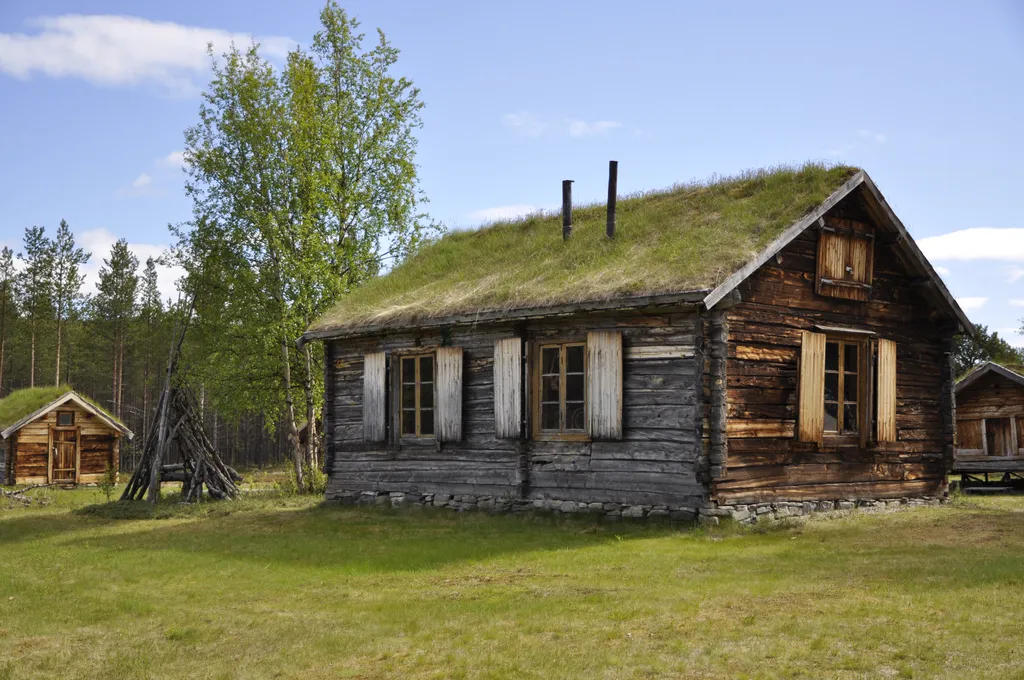
The farm buildings from Jávrebainjárga are from the beginning of the 19th century. In 1957 they were moved from Jávrebainjárga, Valjok, about 50 km east towards Tana, and erected on the museum site in 1958. Ole J. Nikkinen, a professional craftsman, was responsible for relocating and rebuilding the farm. Unlike the rest of Karasjok, apart from the old church, the hamlet of Valjok had not been burned down during the Second World War.
Map: Jávrebainjárga, Port, Váljohka Váljohka/Valjok
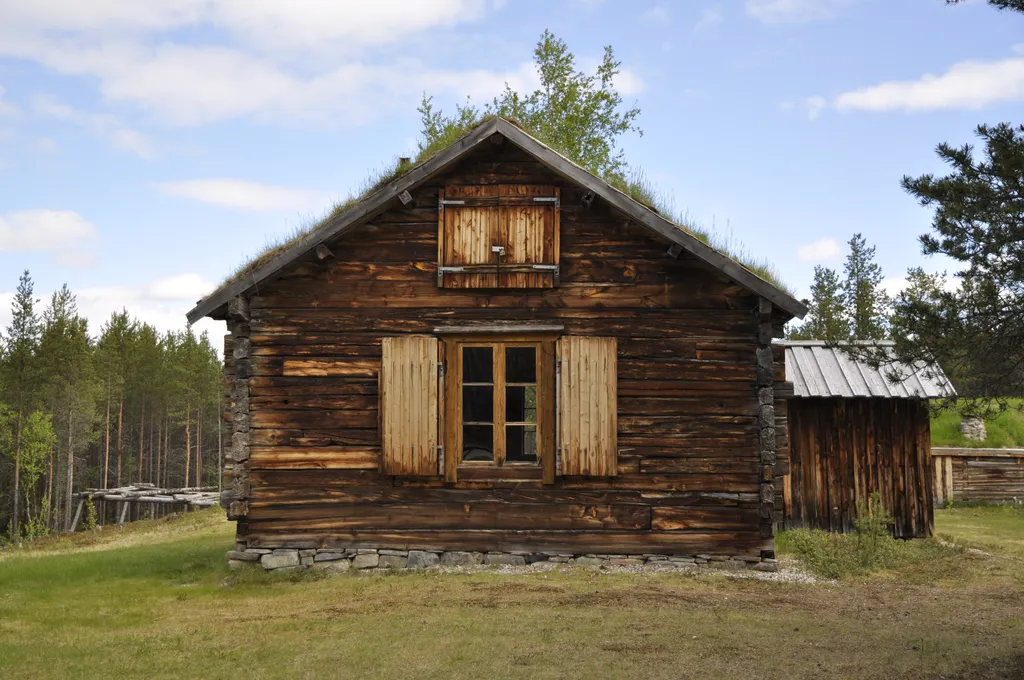
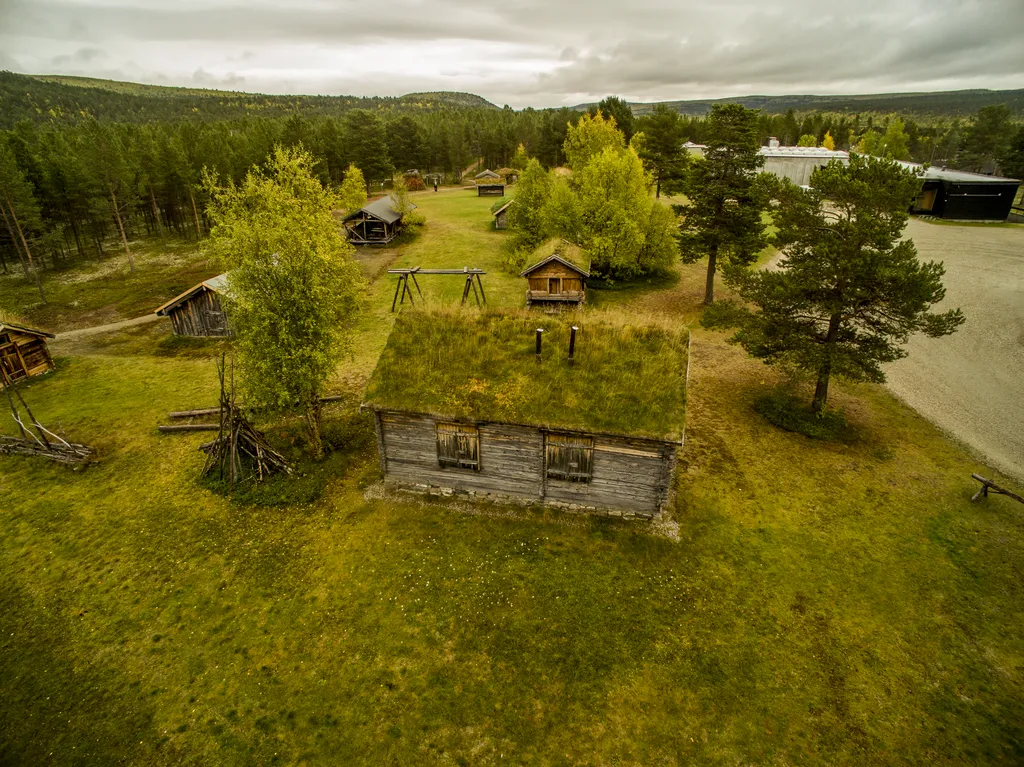
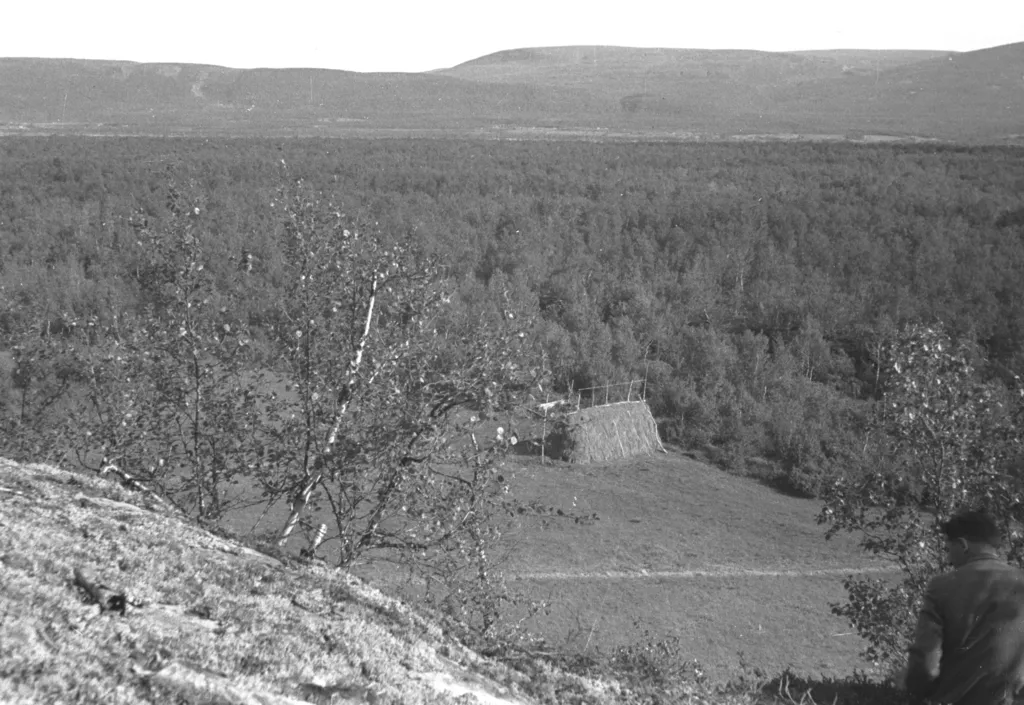
The following buildings are part of the Jávrebainjárga farm complex: the house (no.1), the storeroom (no.2), the cowshed (no.3) and the stable (no.4). Rántet is the place for chopping wood (no.5) and stávrá– the structure for drying haystacks (no.6) are also part of the Jávrebainjárga complex. The house was built in the 1870s, other buildings coming later. The Jávrebainjárga farm buildings are considered to be the best preserved traditional farm complex in Finnmark.
Listen the Sámi yoik – luohti in the Sámi language.
Traditional joik by Per Tor Turi from Karasjok, 2019
Jávrebainjárga’s house (no.1)
The house was built in 1870s. The many holes on the outer walls of the house are from the nailing of skins for drying.
Traditional Hay Preserving Method
In 1997 Sámiid Vuorká-Dávvirat documented a traditional hay preserving method. The photos show Osvald Guttorm and a fully equipped horse with a horse-collar. This harness was used to drag loads, such as ploughs, harrows and logs or, as in the photos, to pull a sleigh. On top of the sleigh is a wooden lattice, hehkke in northern Sámi. It was used for transporting hay and turf. The hay was placed in stacks or on racks made of wood. The stacks were left outside until they were collected by horse in the winter. Hay was winter fodder for reindeer and other farm animals.
The photos belong to SVD collection of photographs. Documentation was part of the SVD project called “Hehke geavaheapmi” (the use of a hehkke). The project was documented by museum employee Berit Åse Johnsen in the Open-air Museum in 1997.
-
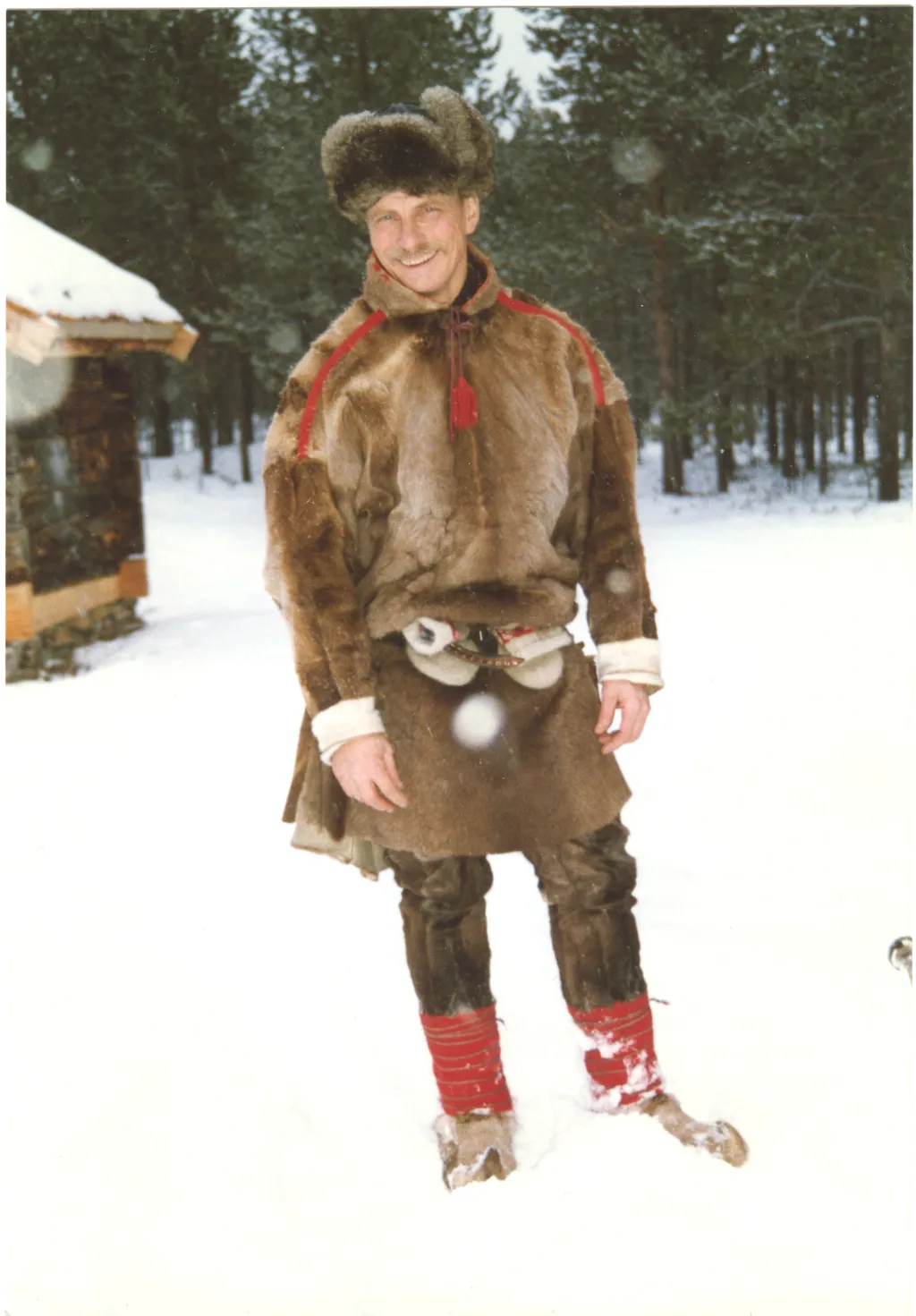
- Osvald Guttorm in the Open-air Museum. Photo: Berit Åse Johnsen, SVD 1997
-
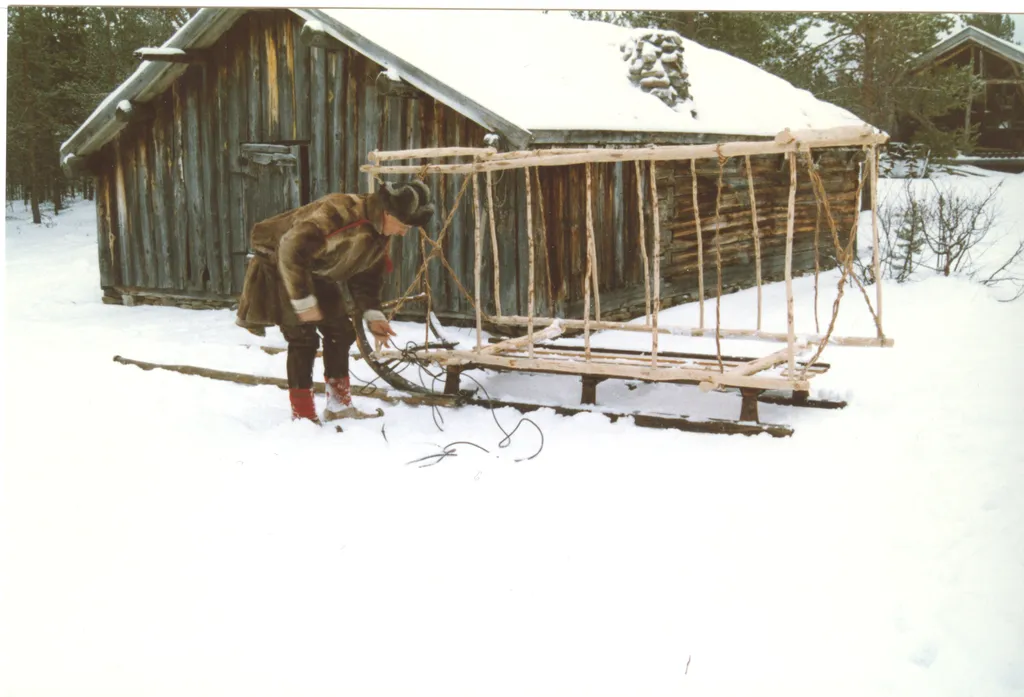
- Osvald Guttorm fastening the wooden lattice, hehkke, on top of the sleigh. Photo: Berit Åse Johnsen, SVD 1997
-
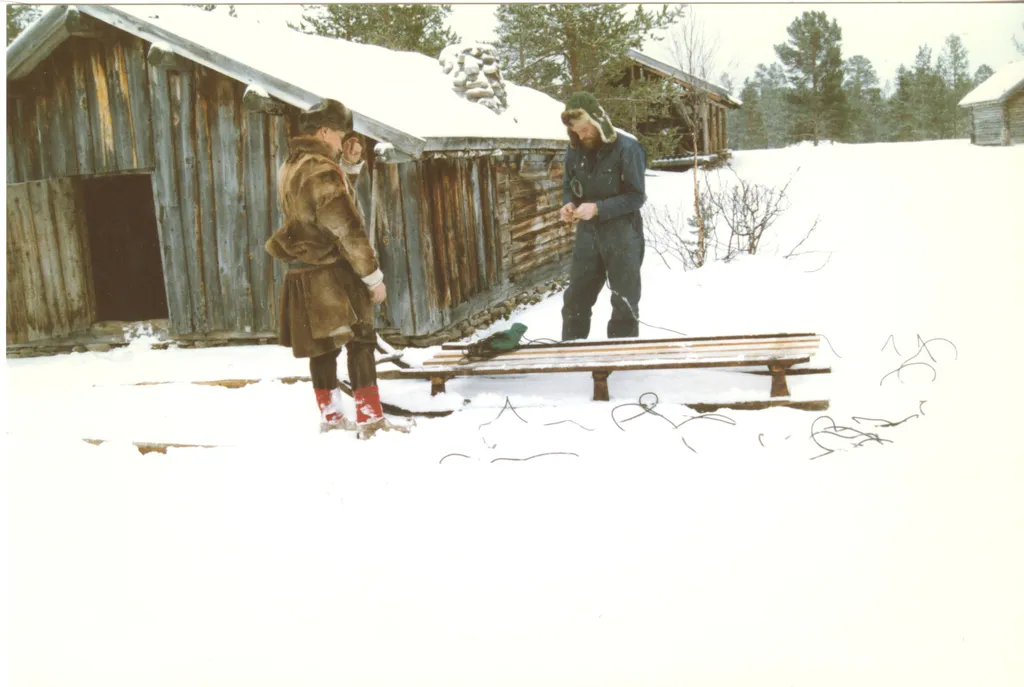
- Osvald Guttorm preparing the sleigh. Photo: Berit Åse Johnsen, SVD 1997
-
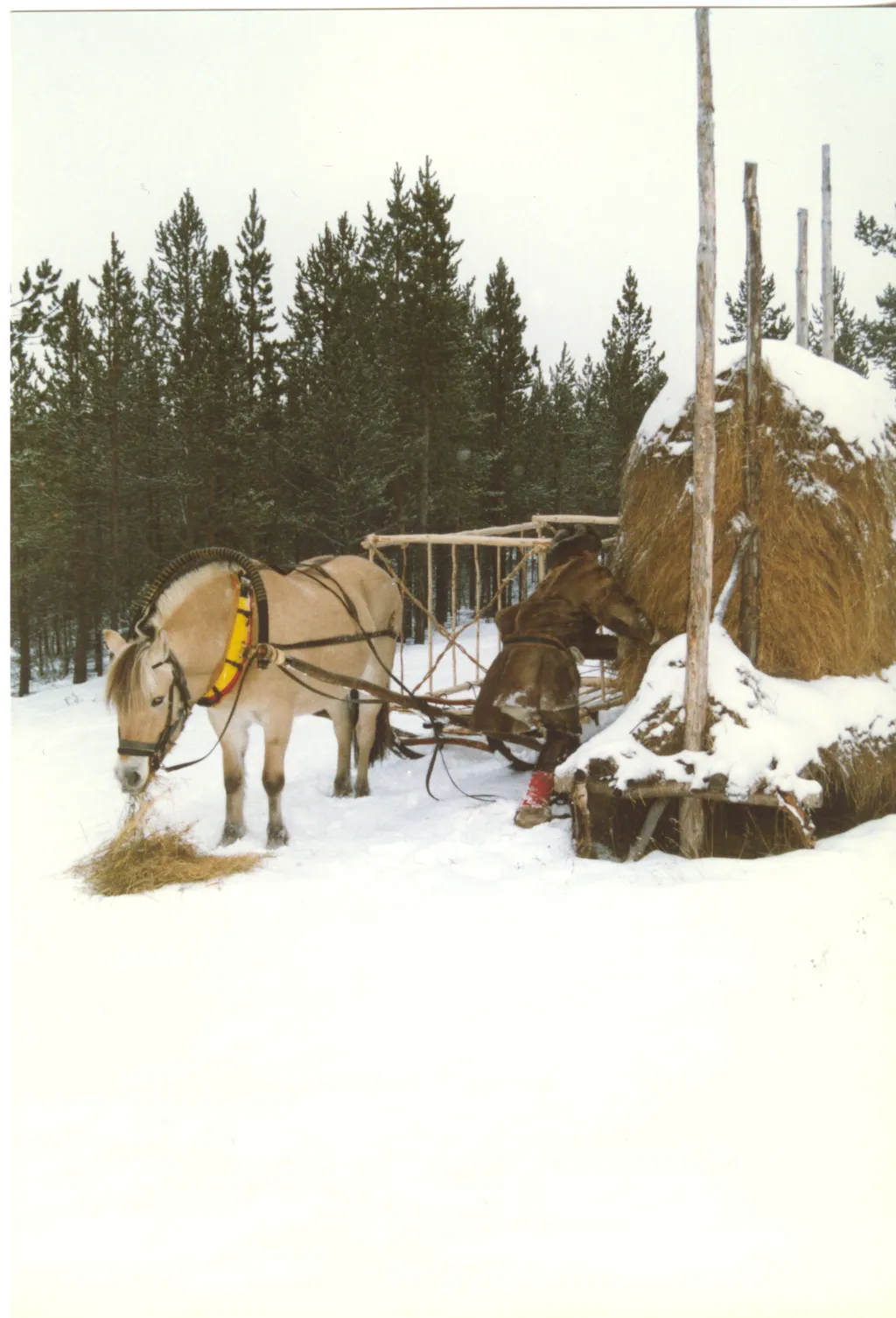
- Osvald Guttorm by the haystacks. Photo: Berit Åse Johnsen, SVD 1997
-
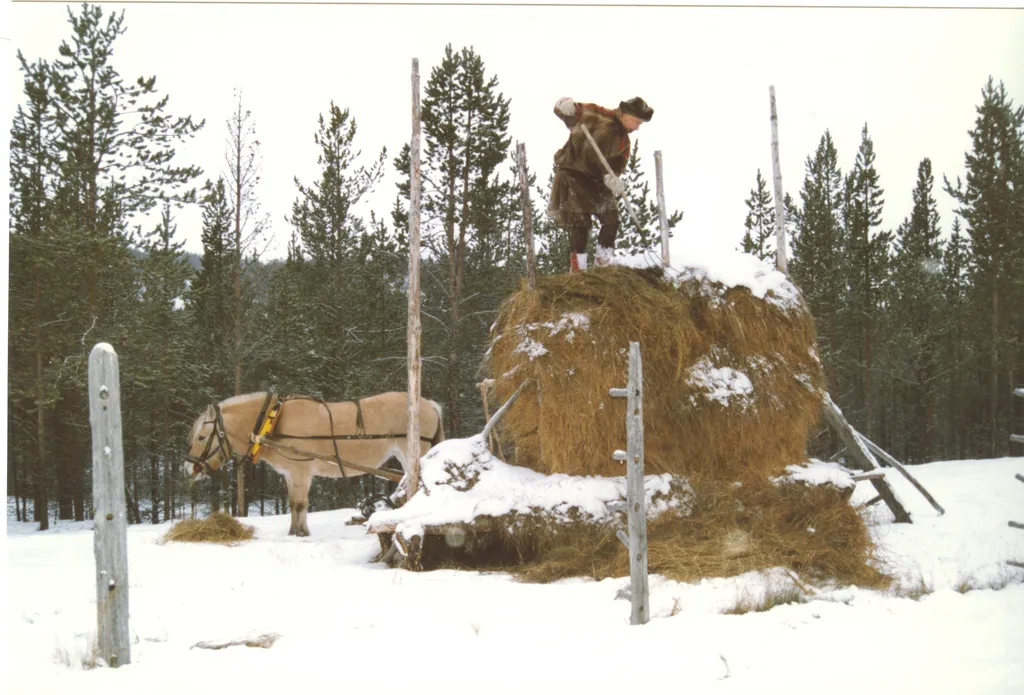
- Osvald Guttorm on top of the haystack. Photo: Berit Åse Johnsen, SVD 1997
-
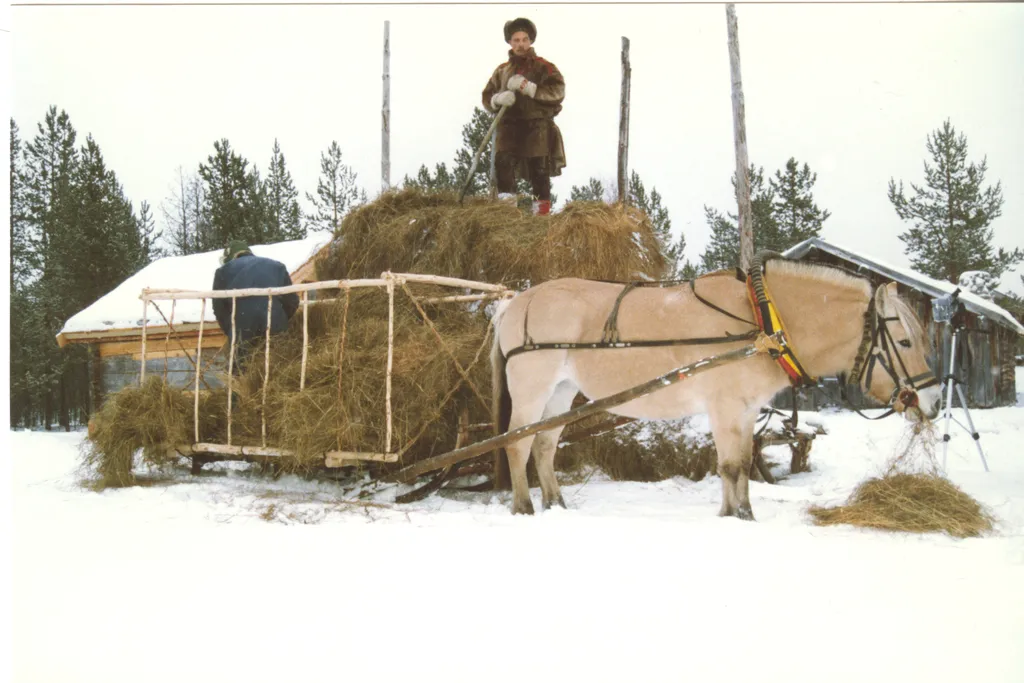
- Osvald Guttorm on top of the haystack. Hehkke is filled with hay. Photo: Berit Åse Johnsen, SVD 1997
-
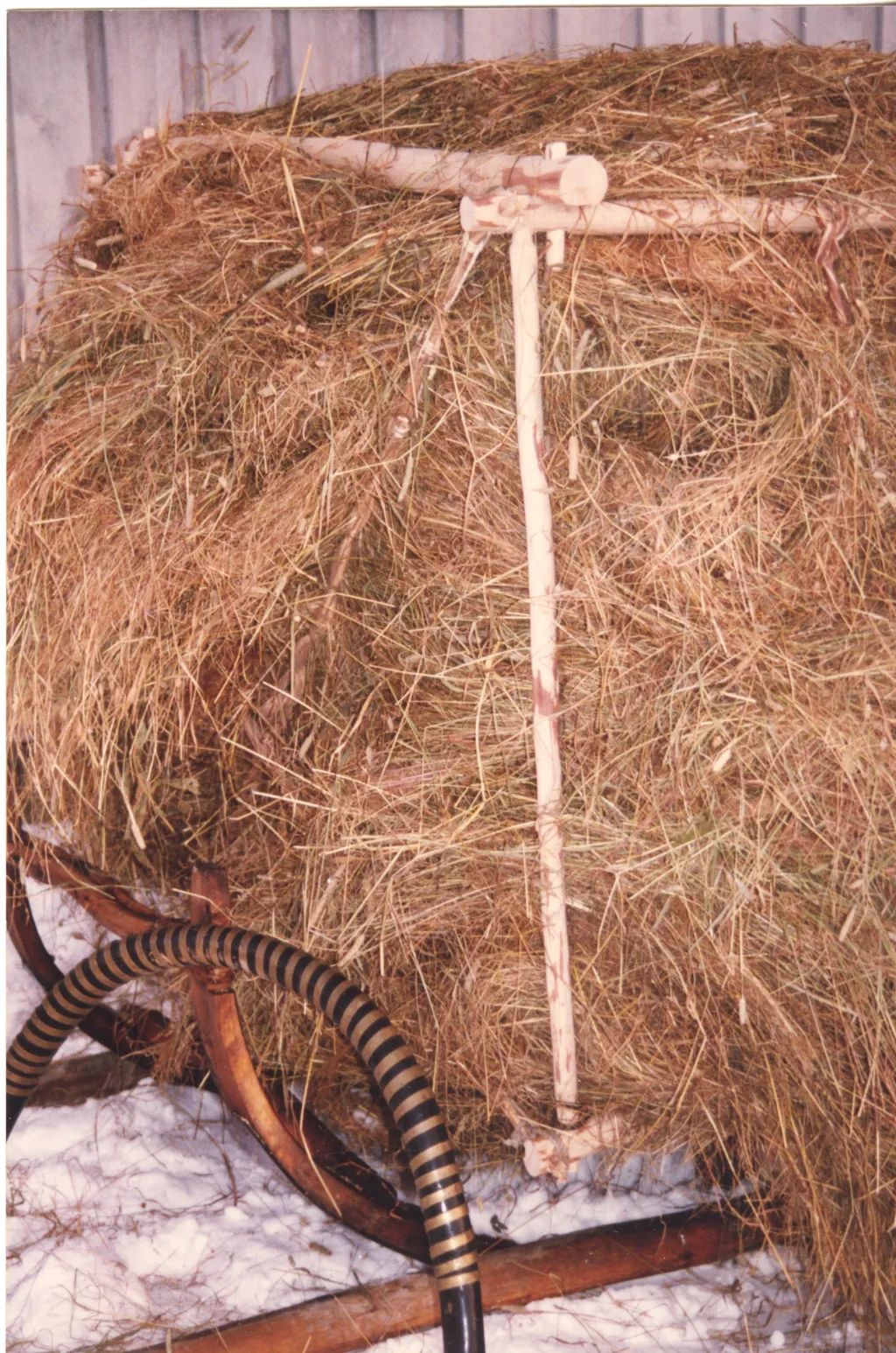
- Hehkke full of hay. Photo: Berit Åse Johnsen, SVD 1997
-
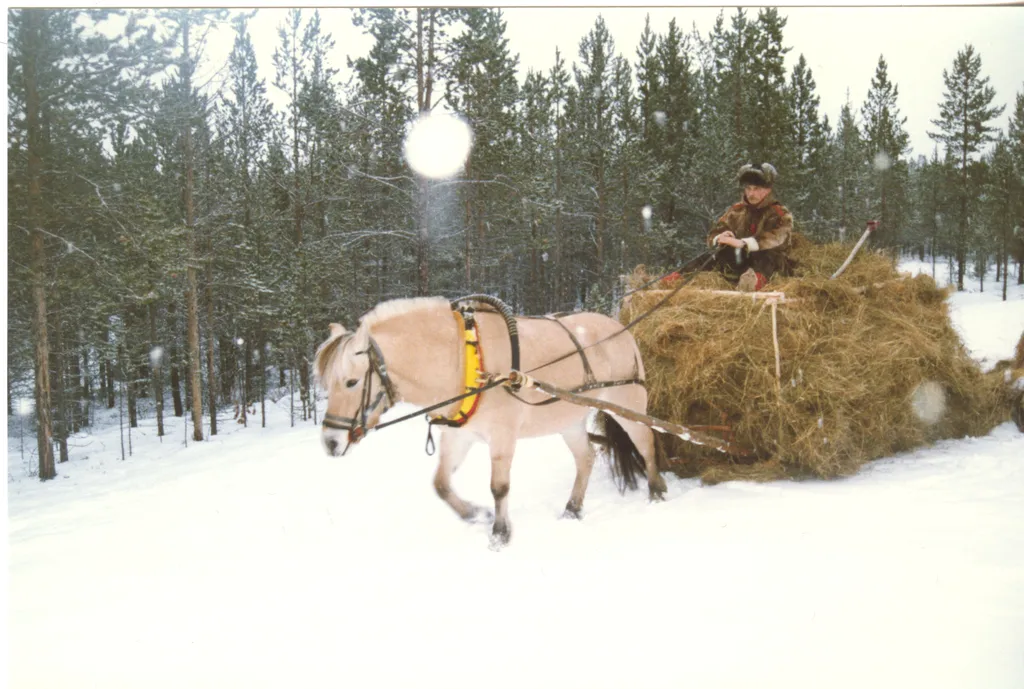
- Osvald Guttorm on top of the hay pile. Horses were practical draught animals in winter. Photo: Berit Åse Johnsen, SVD 1997
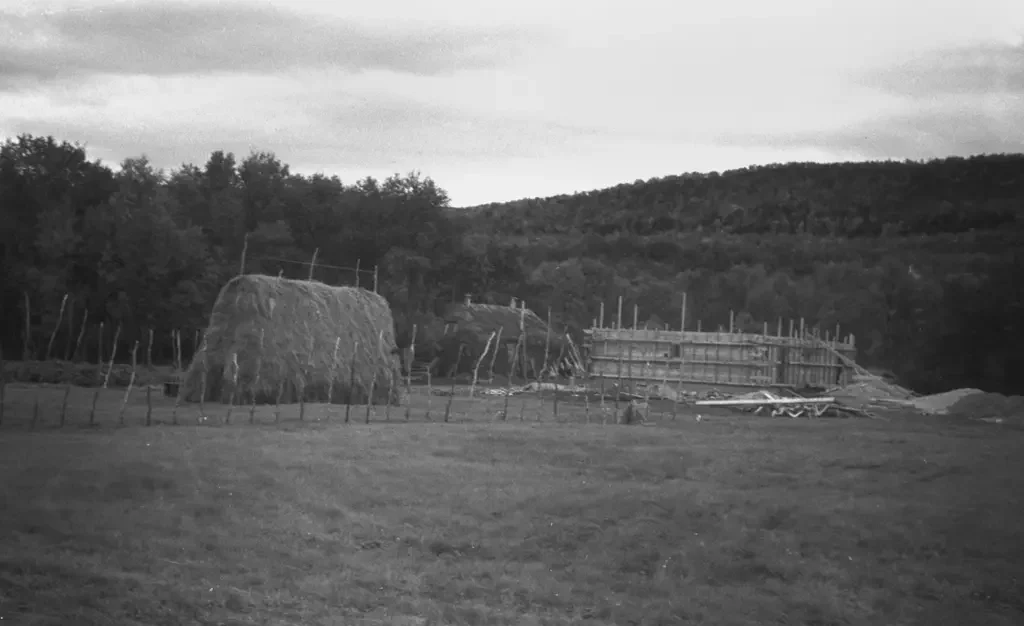
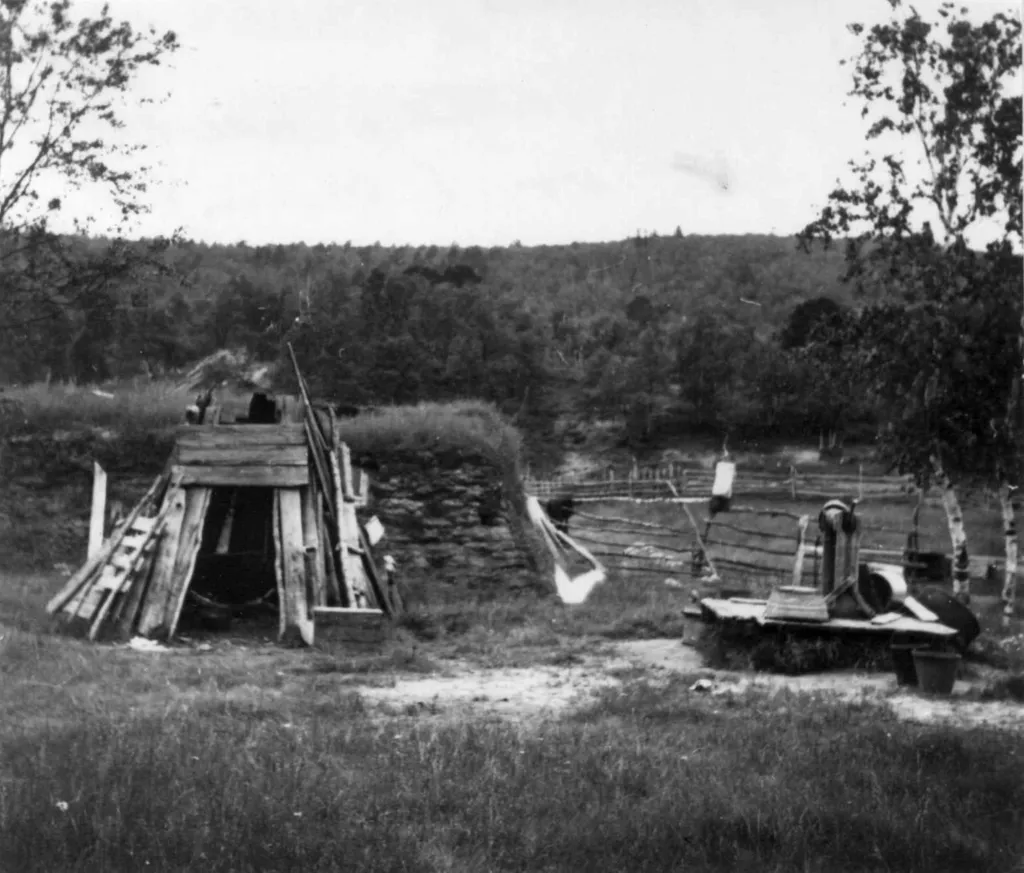
To obtain water there was a rocker well. Before wells water was taken from the springs and rivers.
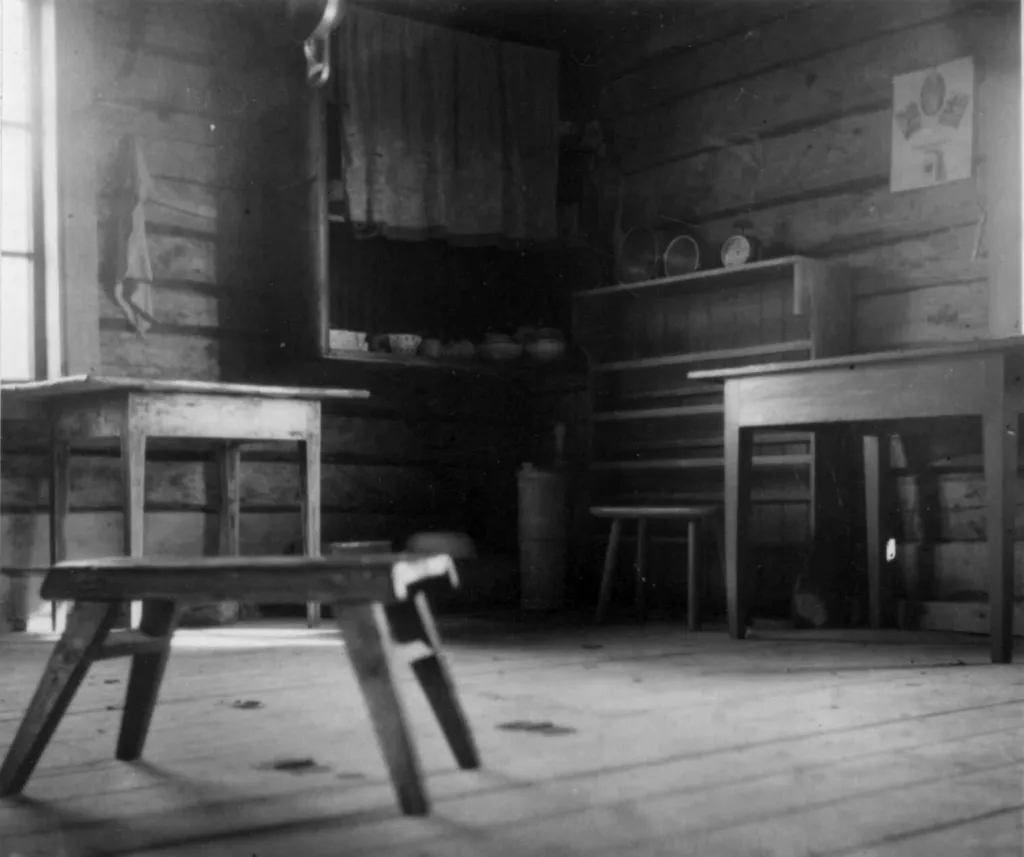
The furnishings in the house are representative of the Sámi farmers’ home environment in the 1950s. They reflect the resident’s craft skills – everything was homemade by hand.
Scrubbing Floors and Traditional Ways of Cleaning Wood
Traditional cleaning methods included the use of clean river sand and water for unpainted wooden floors. Painting floors started after the period of evacuation during the Second World War. Ash was also used to clean unpainted wooden floors. Soap was available for those who could afford to buy it for general chores or those who made it themselves.
Sand was sprinkled over the floor and scrubbed perseveringly with shoegrass. Burlap was used as a cloth to speed up drying and keeping the wood light in colour. Shoegrass was also used as a small dish brush.
Traditional Soap Making
Traditionally Sámis made soap using various methods, with varying levels of effectiveness and a vast variety of ingredients. One traditional method involved using wood ashes and fat from reindeer and other domesticated animals. A metal or wooden container like a pot was used for the purpose of blending the ingredients together, followed by heating, straining, molding and drying.
The result was a strong, lye based soapy product that was very effective for washing clothes, apart from traditional Sámi dresses and Sámi hats, which were washed in a river or in a spring. Lye based soap could ruin the colours used in traditional clothing.
Another method of soap making involved caustic soda. The initial step involved making a lye, which was done by pouring boiling soft water over cooled, hard wood ashes. Then the mixture was left to stand for 12 hours in a container. Fat was then added that needed to be melted and the mixture strained through a cloth into cold water. A hard block formed, which when the mixture cooled, could be cut into smaller pieces of soap.
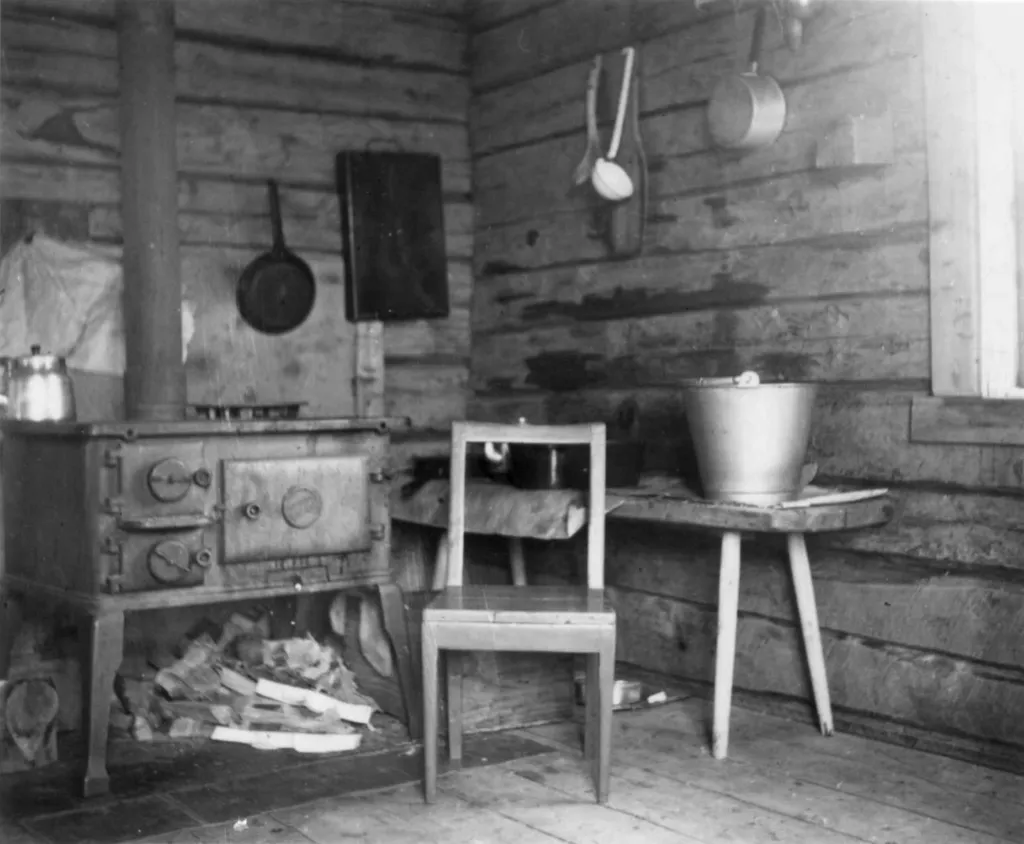
Some of the furniture is original. The cellar under the floor was used for potatoes, butter and other food that needed to be kept cool. The simple interior design, lacking curtains, flowers and decorations, came from the pietistic view of Laestadianism. Laestadianism is a religious revival here in northern Norway, Sweden and Finland.
Lars Levi Laestadius (1800-1861) was a Swedish pastor and botanist, famous for founding the pietistic revival movement Laestadianism. Pietism is a movement within Lutheranism that combines an emphasis on biblical doctrine with the reformed emphasis on individual piety and living a vigorous Christian life.
Laestadius worked primarily in Norrbotten in Sweden. Laestadianism was founded in 1844 during his time as a vicar in Karesuando. According to his preaching, decoration and decorative design was considered as a sin.
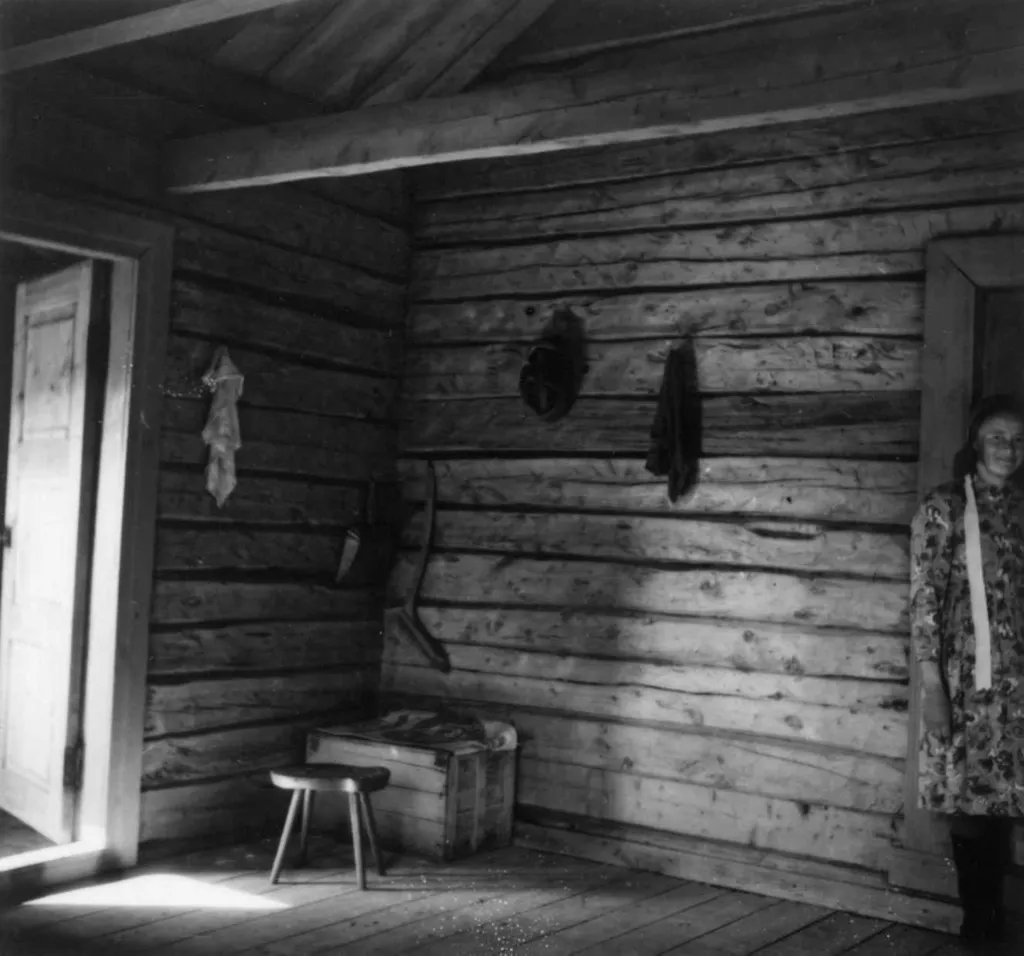
The house has had many owners. The last owner was Johannes Henriksen Nikkinen (1870–1954). He bought it from a reindeer herder named Josef Olsen Vuolab (1876–1964) who had bought it from the first owner. Nikkinen married Ravdna (Ragnhild) Olsdatter Vuolab, also a reindeer herder.
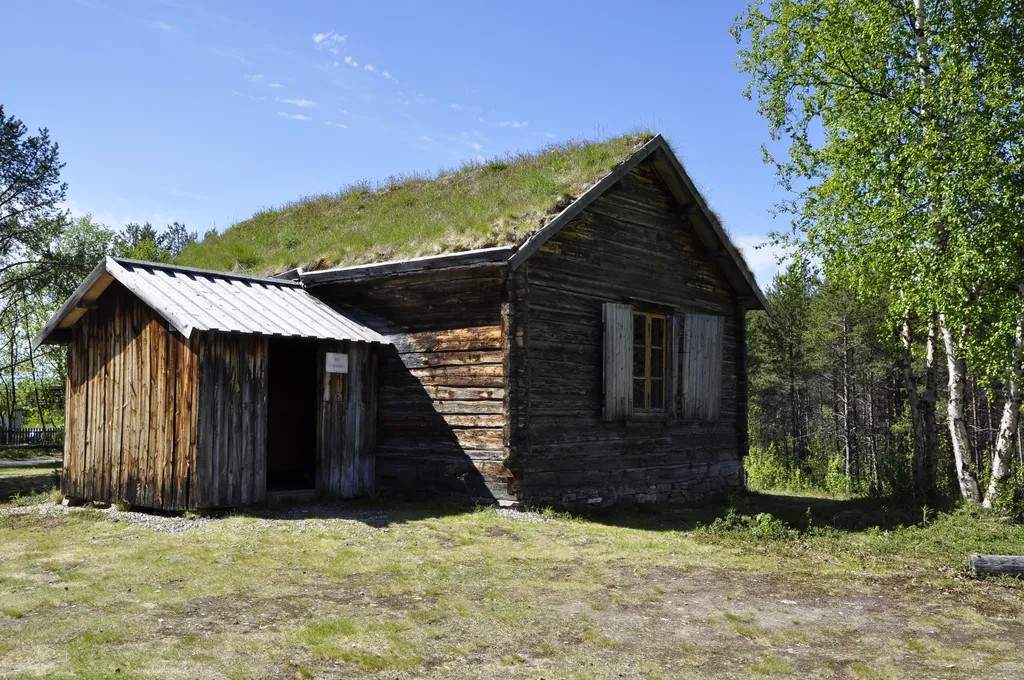
The house has been restored several times. The roof was repaired in 1975 and 1976 by professional craftsman Jovnna Ovllá, Jon Ole Andersen. In 2006 and 2007 the old roof was replaced. The restoration work was completed by Ronald Renmælo and Siv Holmin, both specialists in construction and structural restoration, assisted by Thorolf Bjørnback and Per Erik Tretnes.
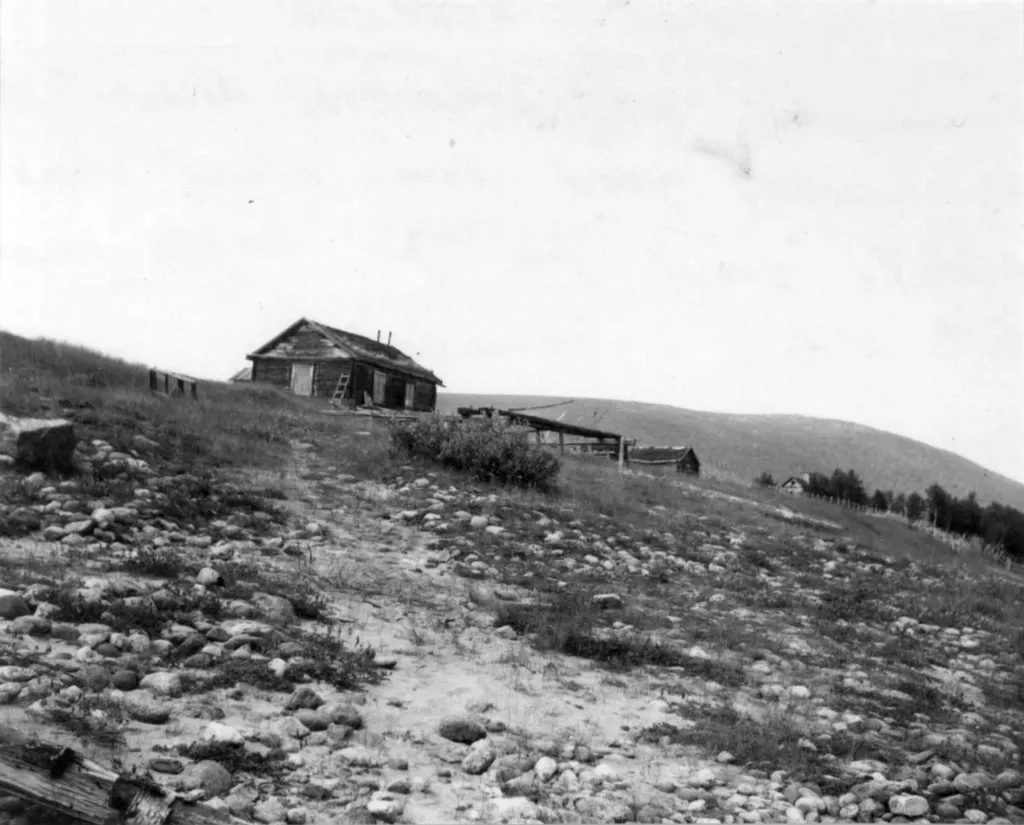
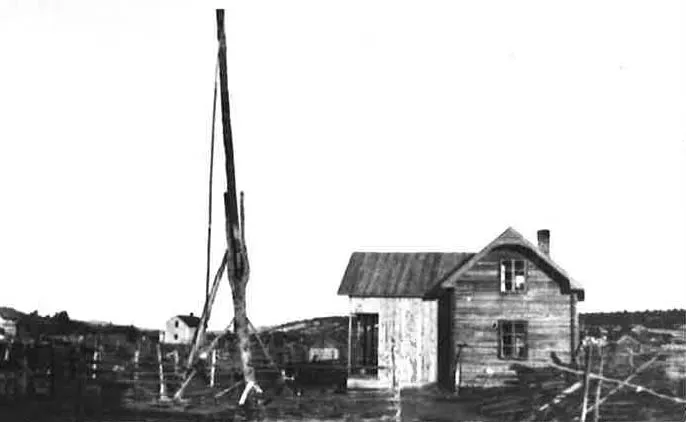
The Photo shows the river Sámi courtyard on its original site at Jávrebainjárga, Valjok. In the 1950s the house was intact, except for the window on the gable wall that have been replaced. The livelihood of the Nikkinen family was based on a combination lifestyle: the small farm with 2 – 3 cows, some sheep, horse and fishing, hunting, berry-picking and handicraft-making. As the photo shows, there was also a little sawmill.
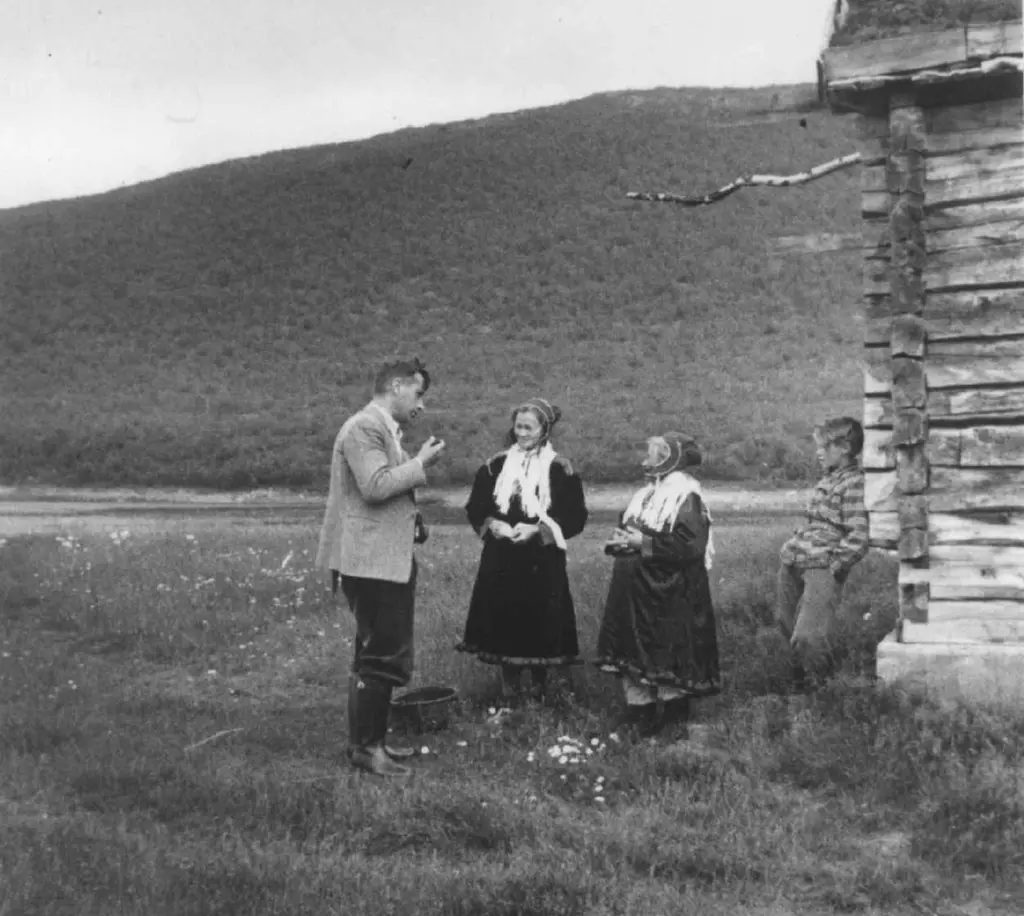
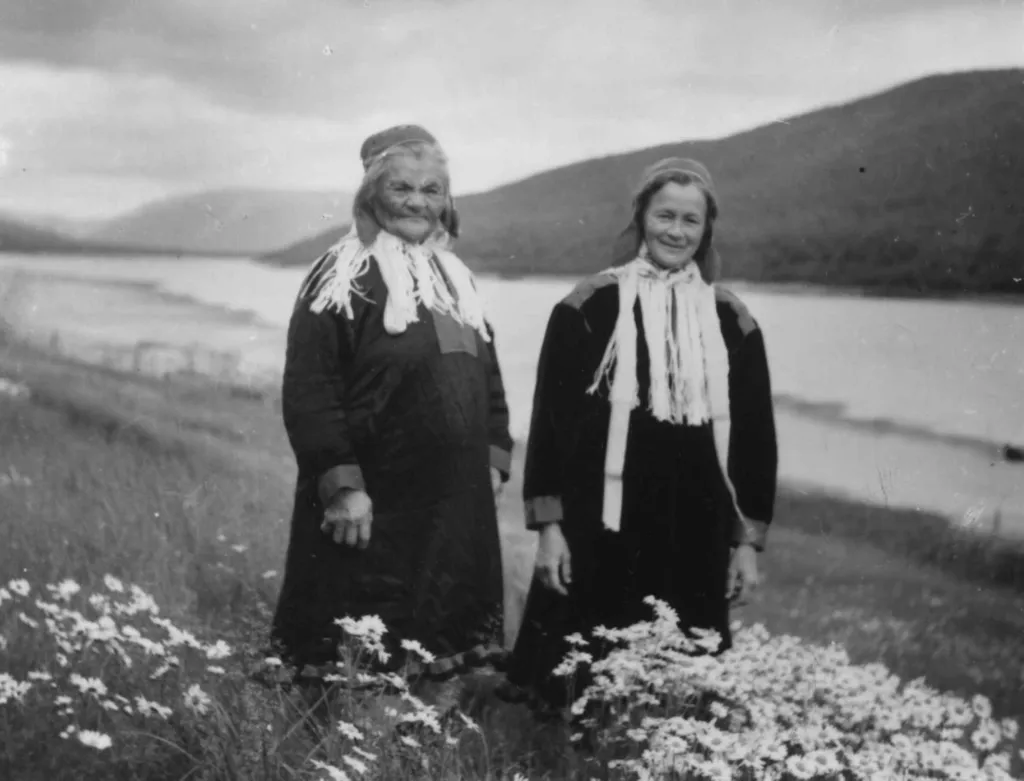
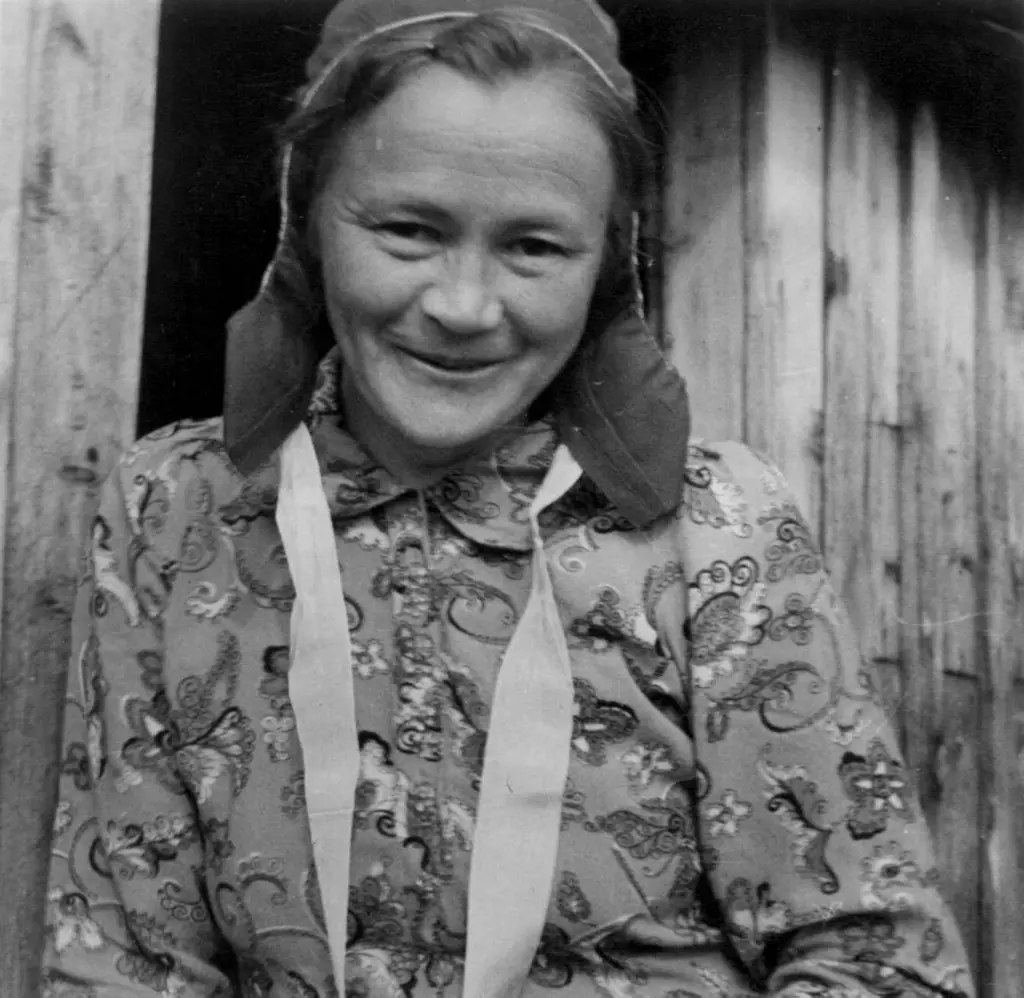
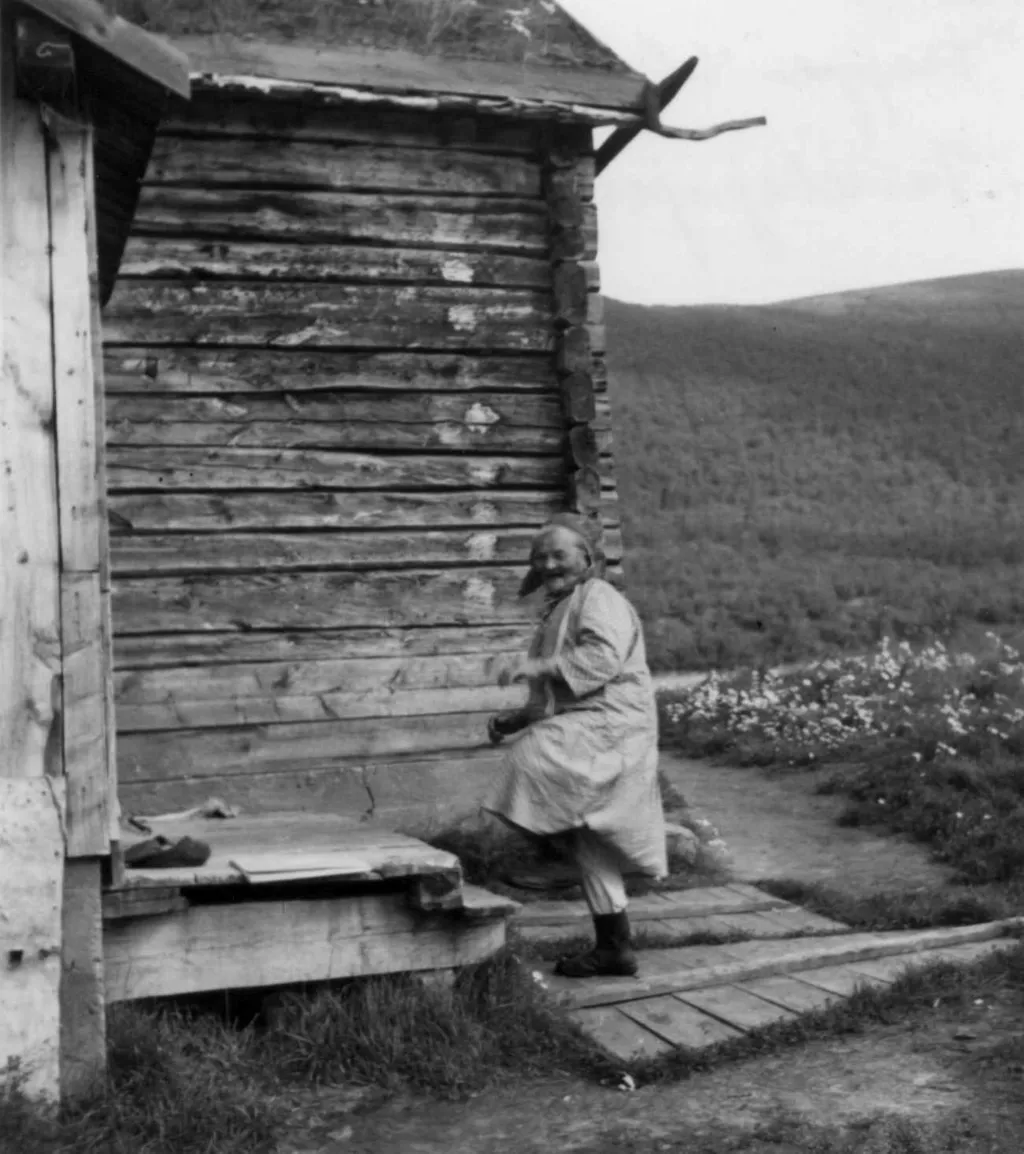
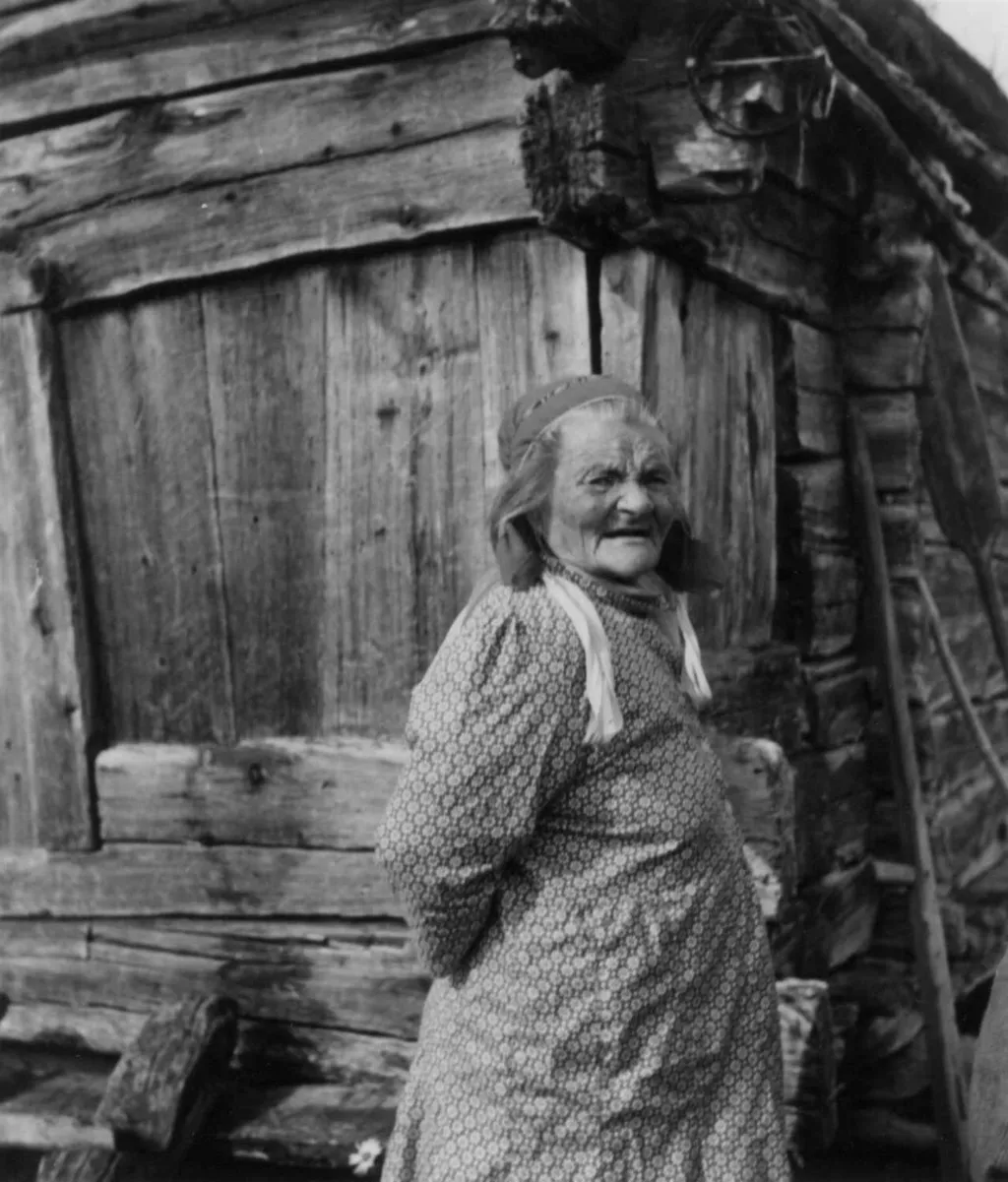
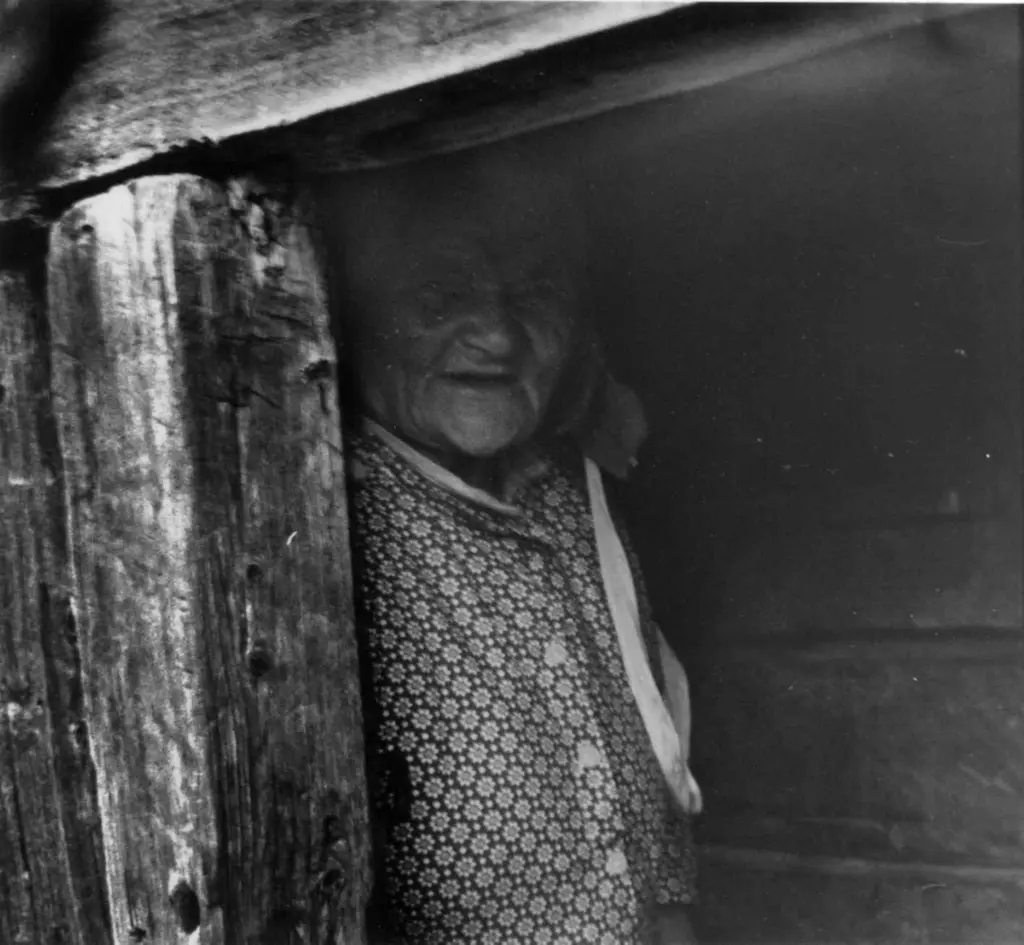
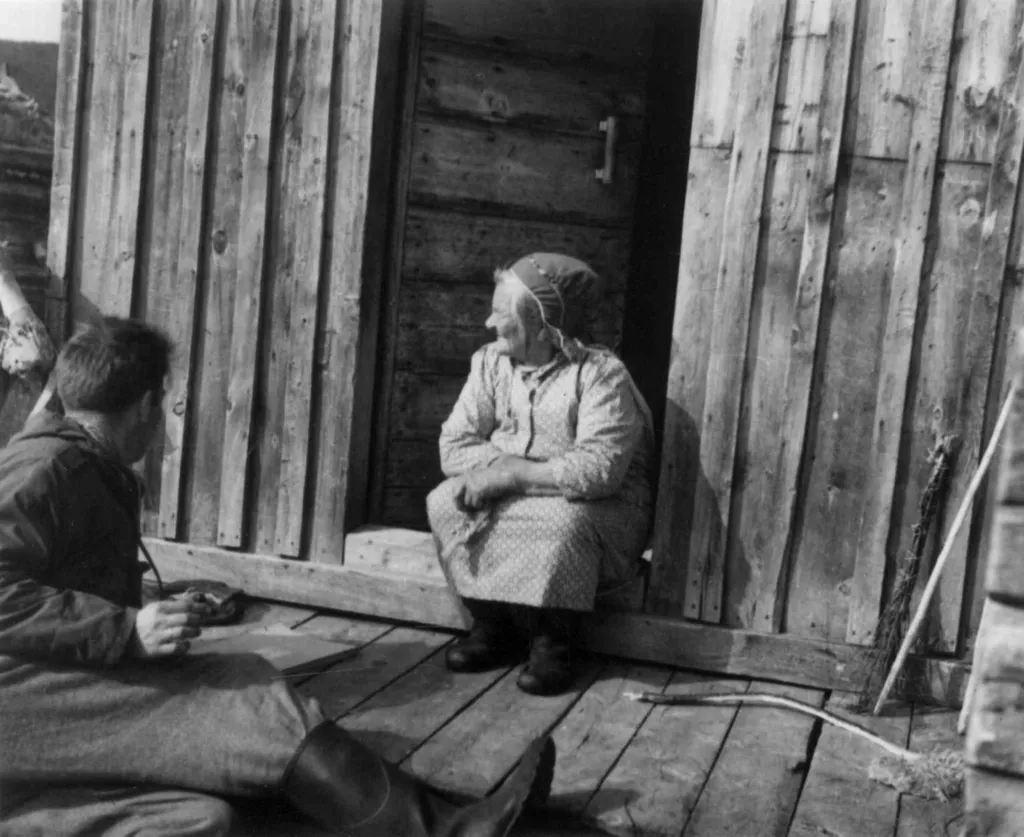
Asbjørn Nesheim who documented and filmed in 1952
Asbjørn Nesheim (1906-1989) was a Norwegian linguist and curator known for his research into Sámi languages and cultural history. He was born and raised in Trondheim. Nesheim was also responsible for creating and building up the Sámi Department at the Norsk Folkemuseum in Oslo in the 1950s. During his travels in Northern Norway, he documented the life of Sámi people.
Áiti – storehouse (no.2)
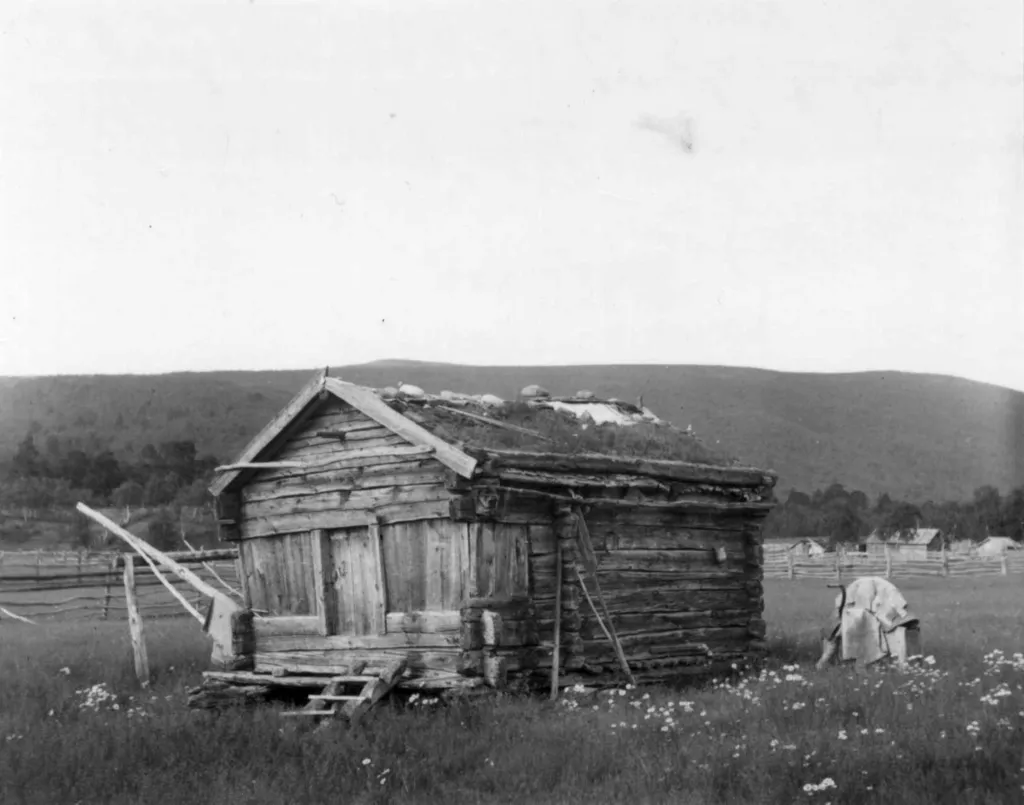
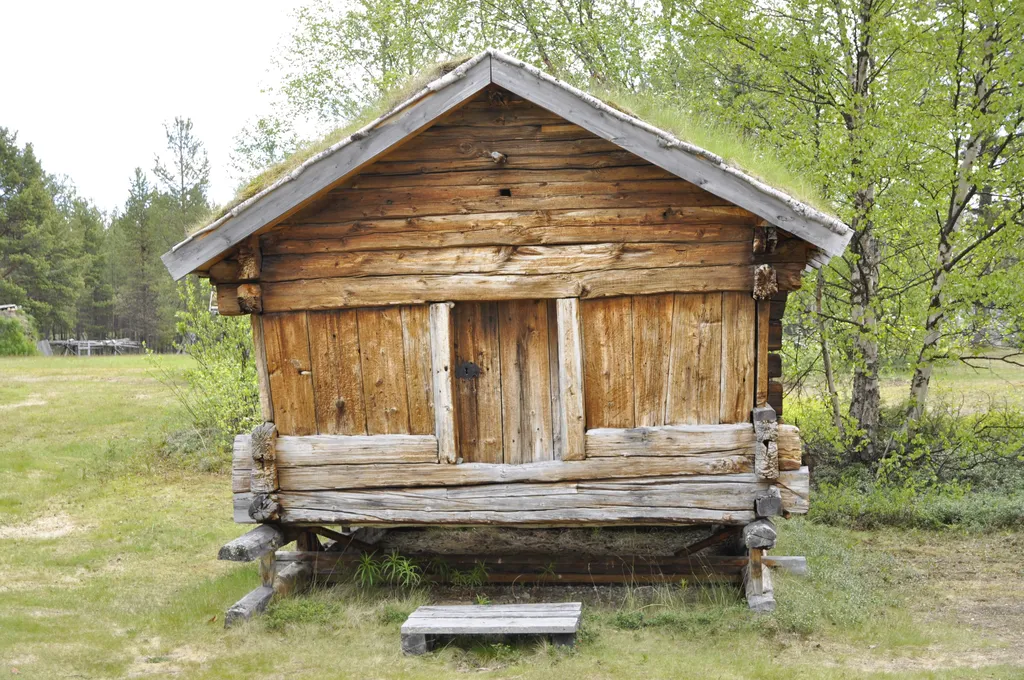
Áiti, a storehouse, is an outbuilding meant for storing of food, clothing and other items. In such storehouses, Sámi people stored flour, sugar, coffee and other long-lasting dry goods.
Storehouses were built about 30-50 cm above the ground level on wooden stumps or rocks. These were designed in such a way as to prevent the floor from decaying.
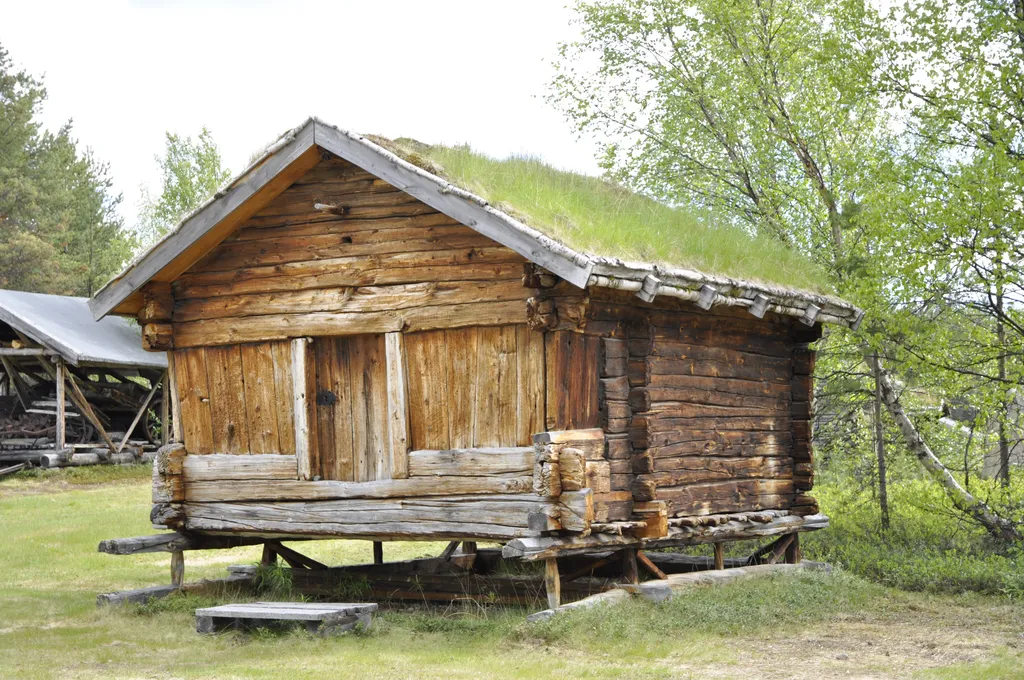
The roof of the storehouse was repaired in 1975 by a craftsman Jon Ole Andersen. The whole storehouse was restored in 1998, 1999 and 2000 under the leadership of restoration specialists Jon Ole Andersen and Thorolf Bjørnback.
Rántet (no.5)
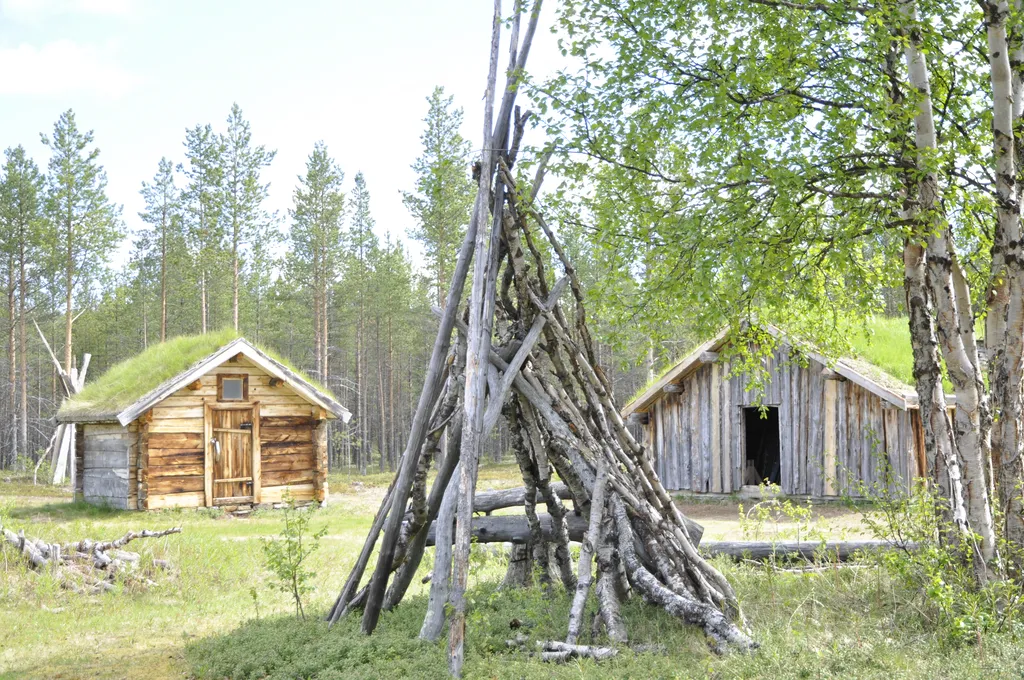
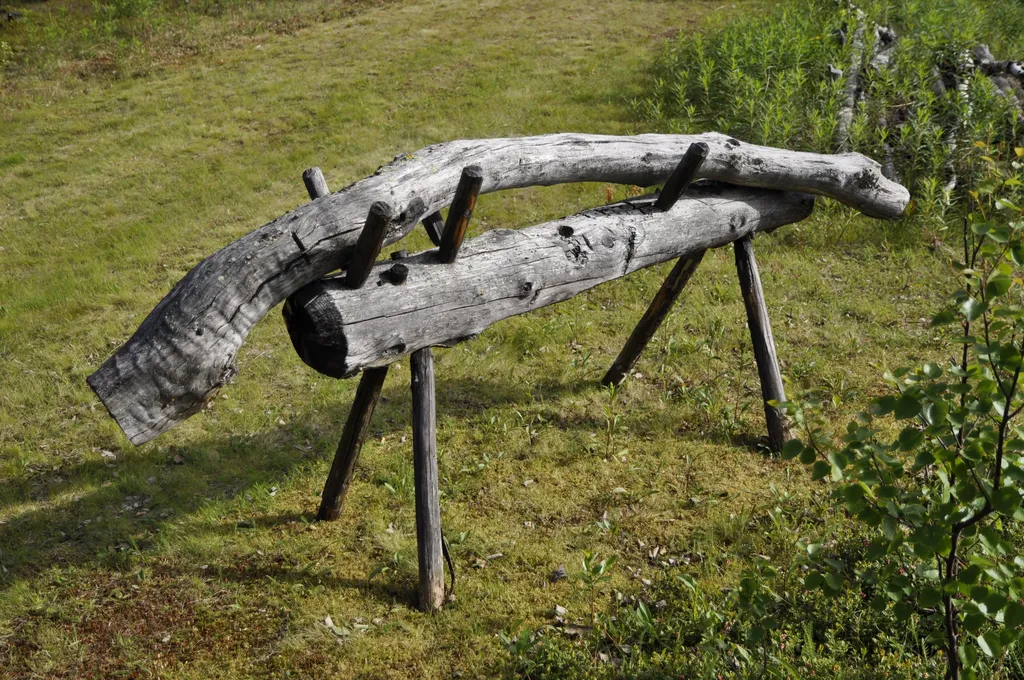
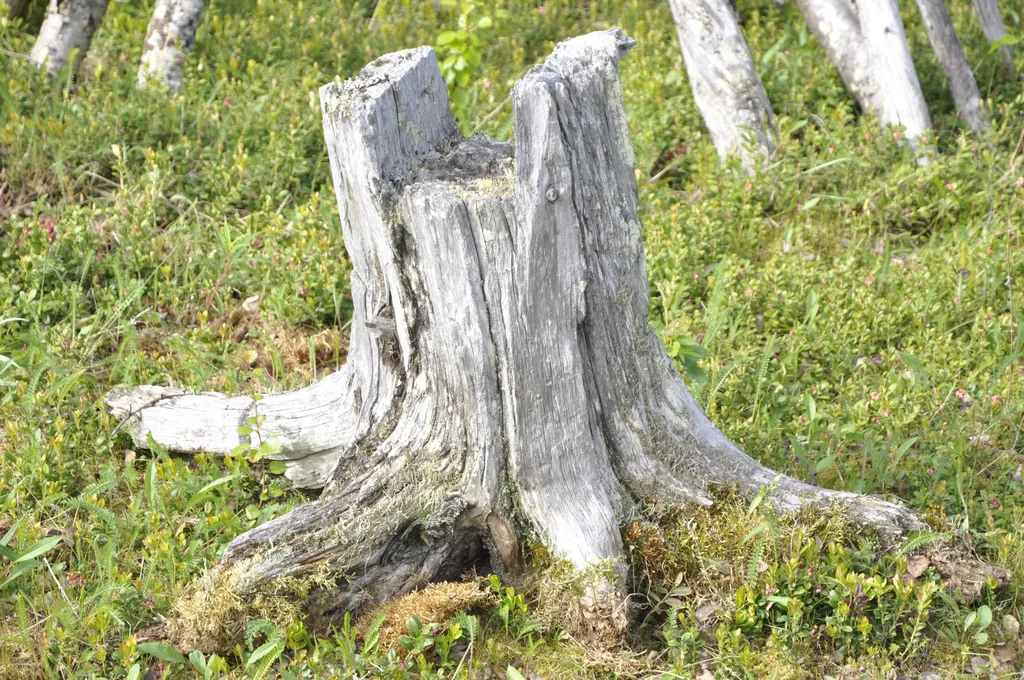
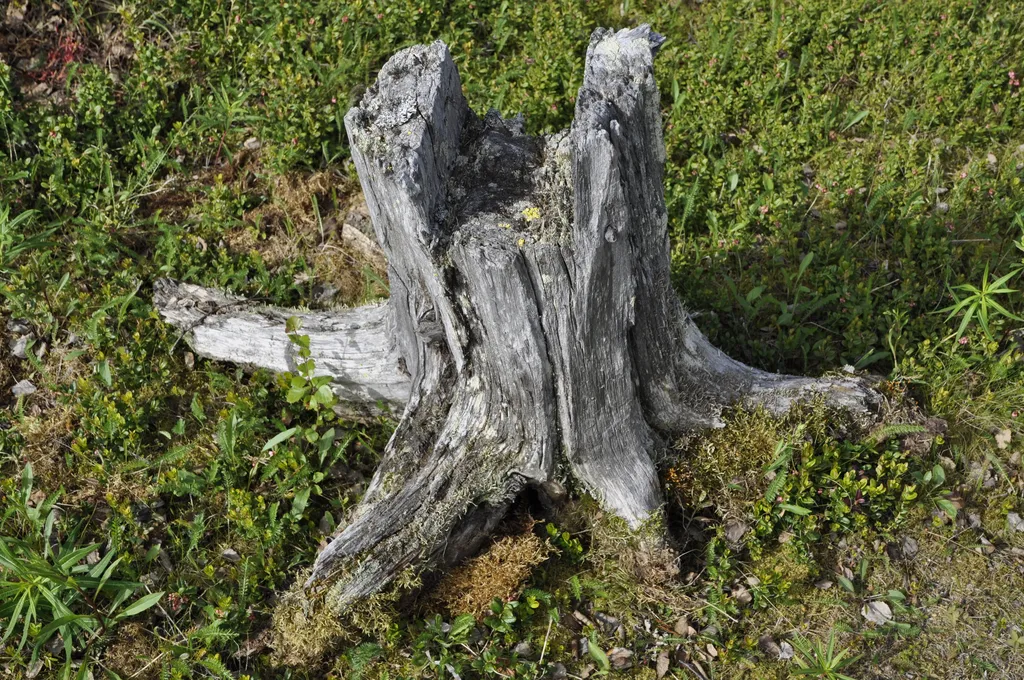
Rántet is an outdoor place for firewood work outside a house or a turf hut. Rántet is meant for cutting, chopping and storing firewood. Rántet usually has three parts: a sawbuck, a chopping block and stacks of wood. This rántet was built in the early 1990s.
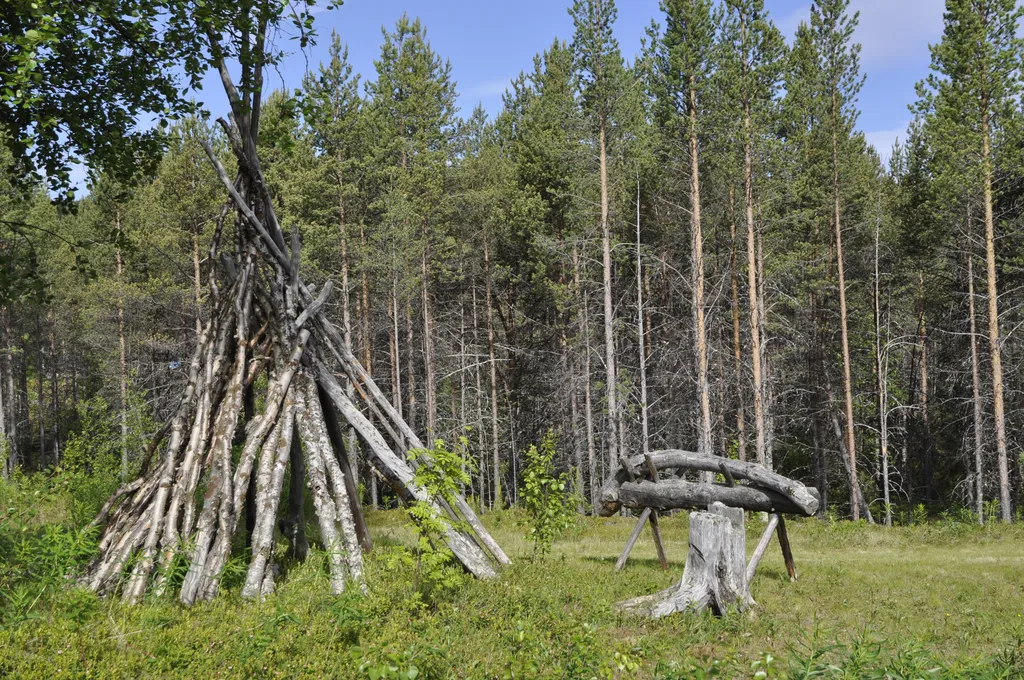
Chopped trees were stored in conical stacks. This way the wood stayed dry and was not covered by snow.
A sawbuck was meant for cutting wood.
The chopping block was meant for cutting branches and chopping up wood.
Rántet was used especially when it was time to prepare firewood for the coming winter. It was important to keep the firewood working area clean. According to the Sámi stories, rántet should be clean especially during Christmas time, otherwise there might be a risk that Juovlastállu (Father Christmas in more recent oral Sámi tradition) and his team of various animals could be caught in messy ground.