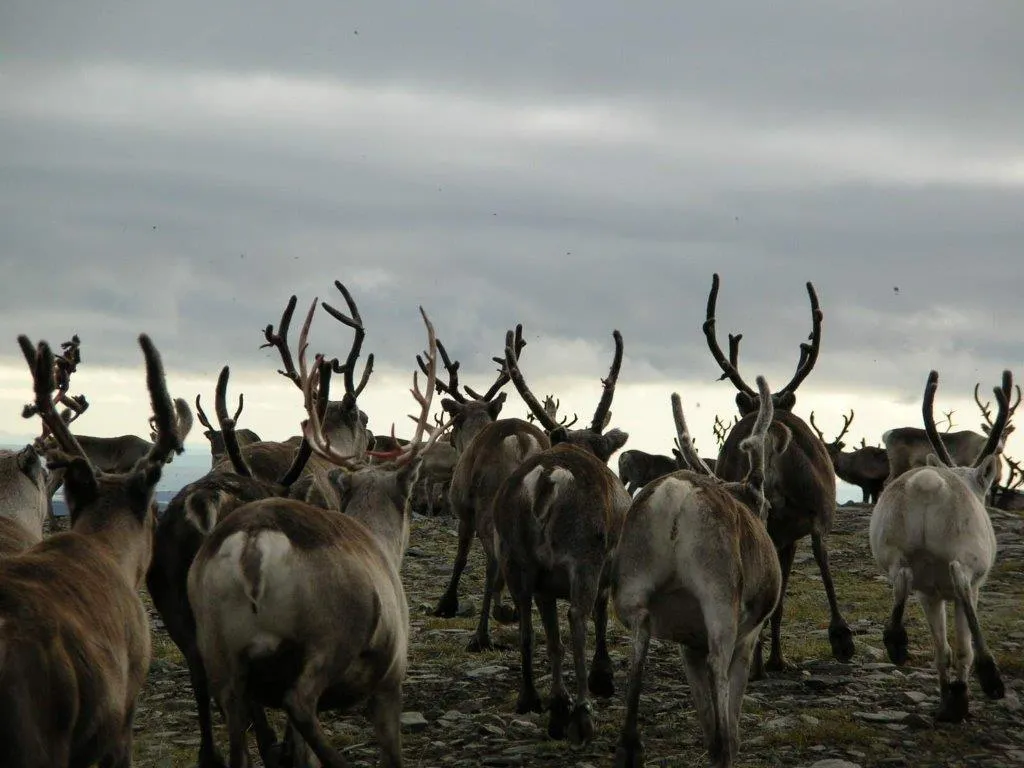
Pittfalls (2)
The Open-air Museum is situated in the area called Stáluguolbba in Sámi, meaning the plateau of Stállu, the mythical human-like giant. To the left from the Open-air Museum area is a place called Stáluláttu, the pool of Stállu, where the NRK Sápmi building is now situated.
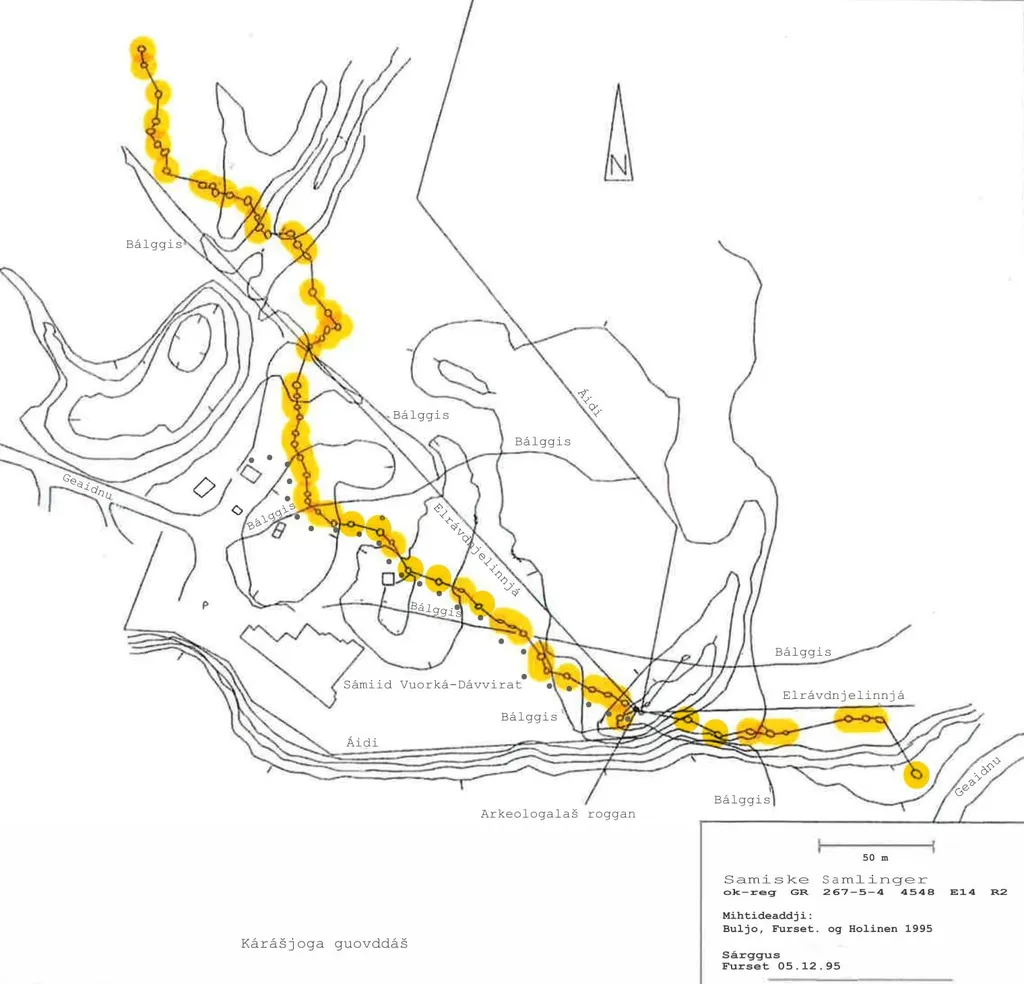
The museum site and the Stáluláttu can be seen in this map: Stáloláttu and Stáluguolbba
In Stáluguolbba, there are many pitfalls which are part of a longer chain consisting of many hundred pitfalls.
Pitfalls are marked in yellow:
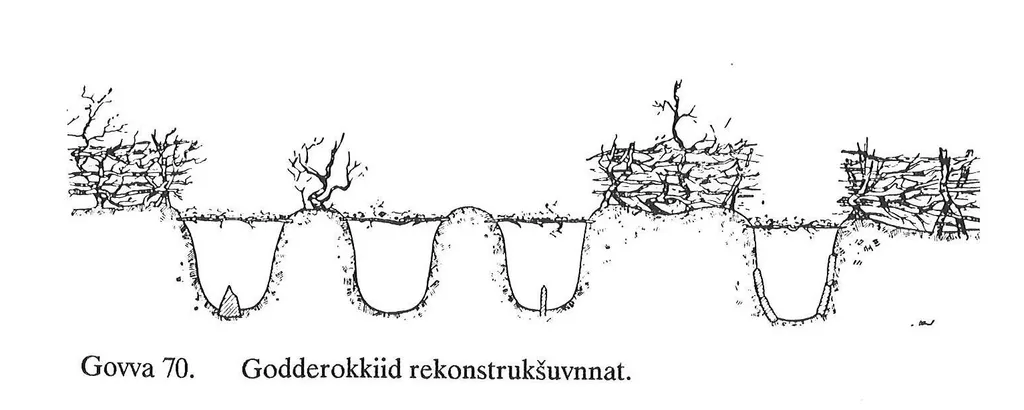
The structure of pitfalls
Pitfalls were usually dug in rows. Pitfall systems were built in connection with natural hindrances, such as watercourses, boggy area and ridges that helped direct the reindeer towards the pits.
Listen to the Sámi joik – luohti in the Sámi language
Traditional joik by Per Tor Turi from Karasjok, 2019
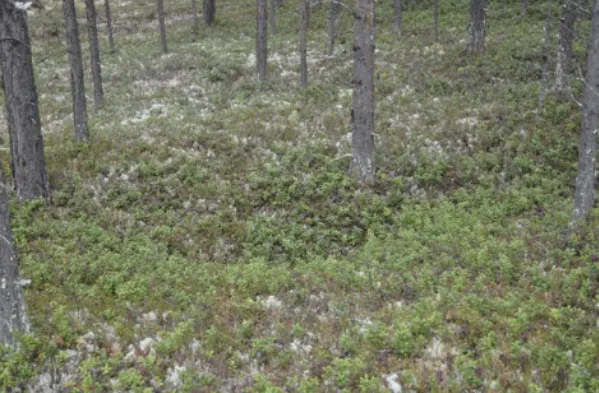
The ancient pitfalls situated outside the museum site were destroyed during construction work related to the development of the village of Karasjok. This happened before the 1978 Cultural Heritage Law came in to force.
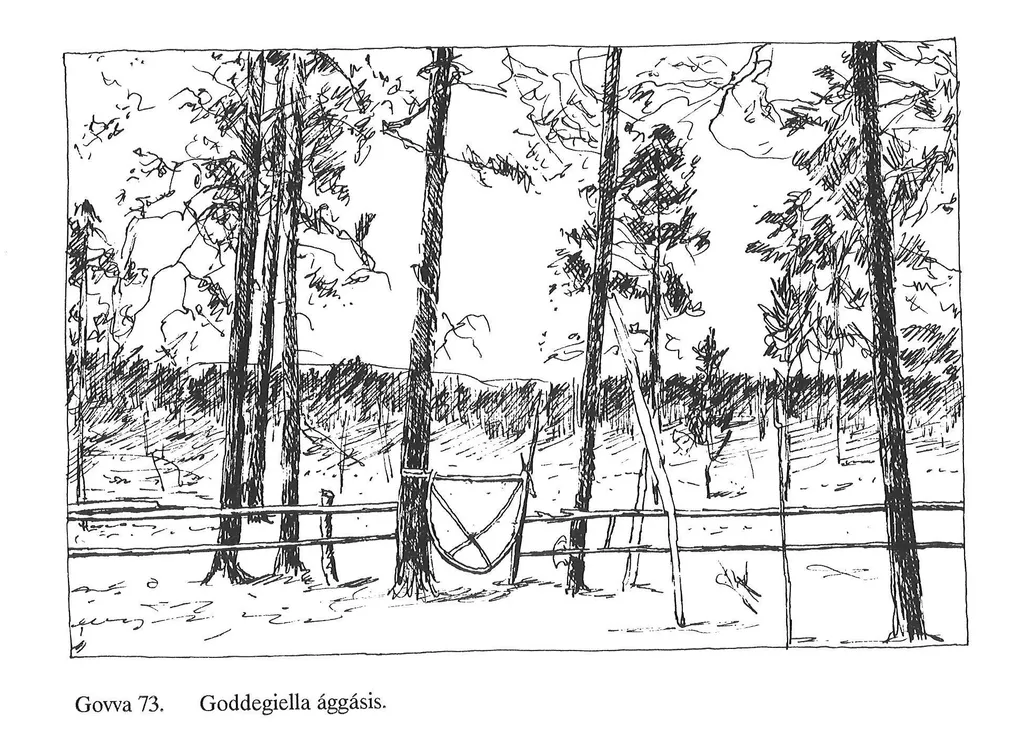
The pitfall system in this area was organized with fences between each pitfall, which probably could include several gates. The fence doors could probably have buckle spears or arrows. This ancient hunting method is called ákkis in Sámi. Near the door, each pitfall was covered with branches of trees, moss and reindeer lichen. In some places, pitfalls were situated very close to each other. It is possible that there were two or more pitfalls for each door.
The system of pitfalls in Stáluguolbba was probably located on the seasonal migration route of wild reindeer in the river Karasjok area.