Pittfalls (3)
Research into pitfalls and their changing size
Archaeologists have excavated and examined seven pitfalls in different locations in the municipality of Karasjok. Excavations were also made in the 1960s at Ássebákti, 12 km from Karasjok in the direction of Kautokeino. These pitfalls were between 1,7 – 2,40 m long, about 1,00 – 2,25 m wide and 1,97 – 2,40 m deep.
Using carbon-14 dating, developed for determining the age of organic materials, the age of pitfalls have been identified as being from 2396 – 934 BC.
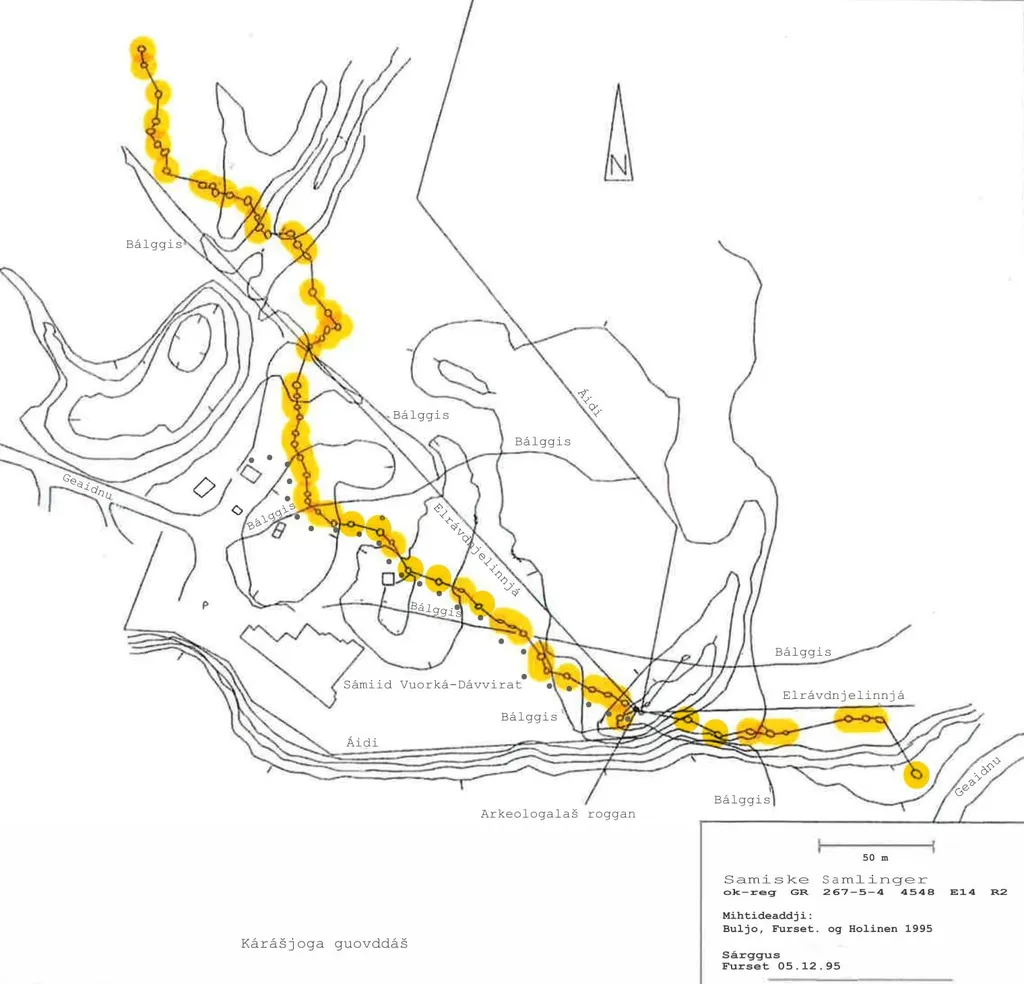
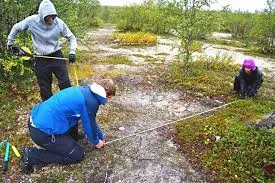
When in 1995 archeologists excavated one of the pitfalls in the Open-air Museum in Karasjok they found that the original size of the pitfall was 1,7 m long, 1m wide and 2,2 m deep. Today its size is 2,97 m long, 1,71 m wide and 0,55 m deep. The difference in size indicates that over time the pitfall has become smaller. The age of this pitfall is estimated to be 4000 years.
Pitfalls in the museum area
The museum is situated in the area called Stáluguolbba in Sámi, meaning the plateau of Stállu, a mythical human-like giant.
The map shows pitfalls in the museum area, marked in yellow.