A Farm From Jávrebainjárga (3)
Stable (nr.4)
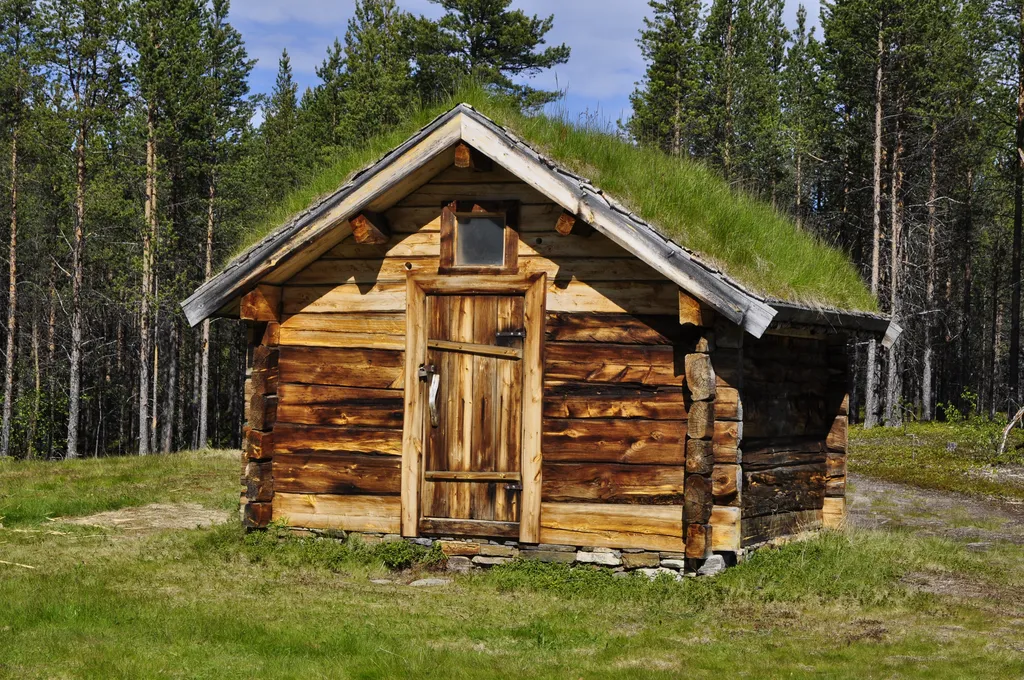
This stable for horses is part of the Jávrebainjárga farm complex.
Stables were usually built with stalls for two horses. Wall space inside the stable is used for storing equipment, especially bridles and halters. A warm woollen horse blanket, in northern Sámi called rátnu, provided warmth and protection to the horse while outside.
The roof was repaired in 1975 by craftsman Jon Ole Andersen. The whole stable was repaired in 1996 and 1997 by Alvin Vuolab and Thorolf Bjørnback under project leader Osvald Guttorm.
A Horse and a Stable
In 1997 Sámiid Vuorká-Dávvirat documented a traditional hay storage method. The photos show Osvald Guttorm and a fully equipped horse with a horse-collar.
The Fjord horse is an ancient Norwegian breed. It has been used for agricultural work, being able to access areas where it is not possible to use tractors. A Fjord horse was ideal for the diversity of work on a small farm and as a family horse. It is docile, friendly and hardworking. It has a broad forehead, big eyes and a short, thick neck.
The horse was fed in the stable. Horse feed, a mixture of grains, such as corn and oats with warm water, was mixed in a bucket. Horses also ate grass or hay at meal times and drank a lot of water along with their food.
The photos belong to the SVD collection of photographs. The documentation was part of SVD project called “Hehke geavaheapmi” (the use of a hehkke). The project was documented by museum employee Berit Åse Johnsen in the Open-air Museum in 1997.
-
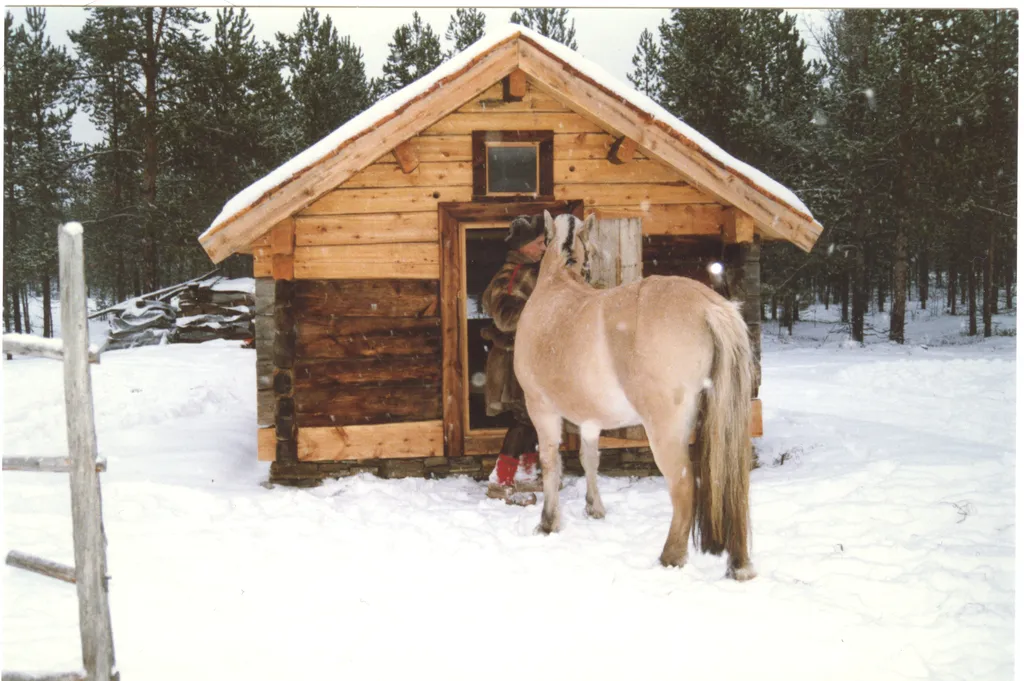
- Osvald Guttorm and a horse outside the stable. Photo: Berit Åse Johnsen, SVD 1997
-
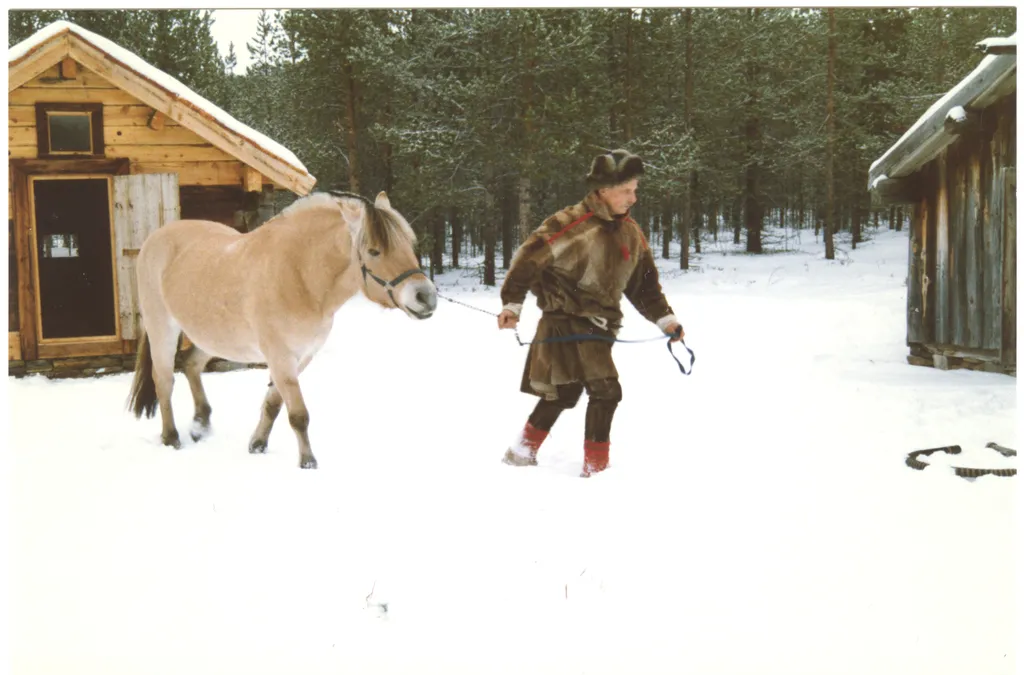
- Osvald Guttorm and a horse on their way to the cowshed. Photo: Berit Åse Johnsen, SVD 1997
-
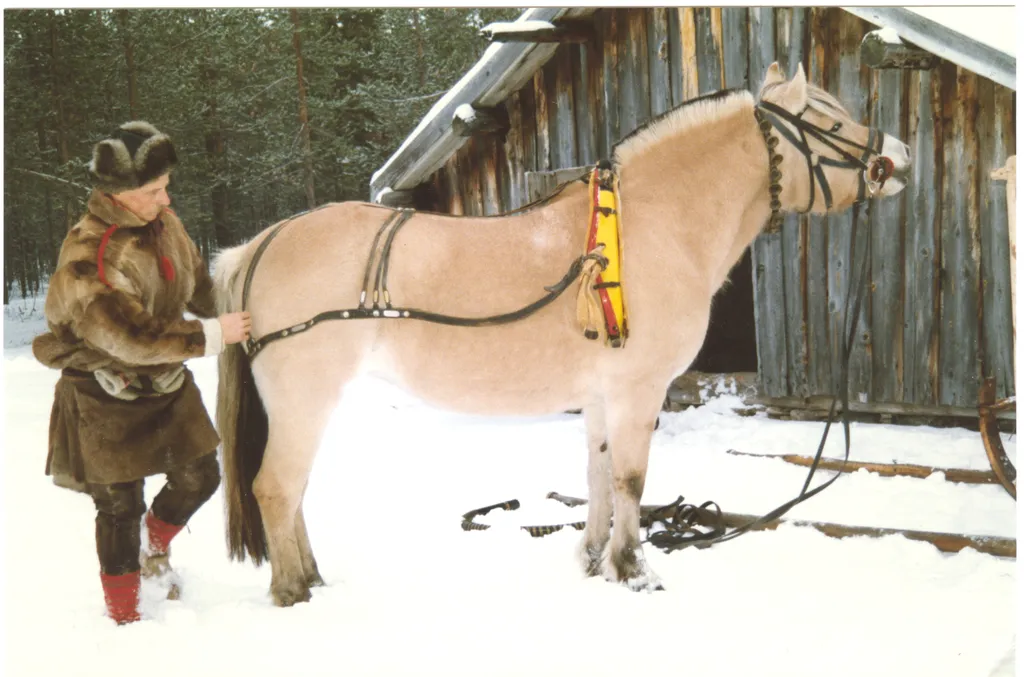
- Osvald Guttorm putting on a horse collar. Photo: Berit Åse Johnsen, SVD 1997
Sawing station (nr.5)
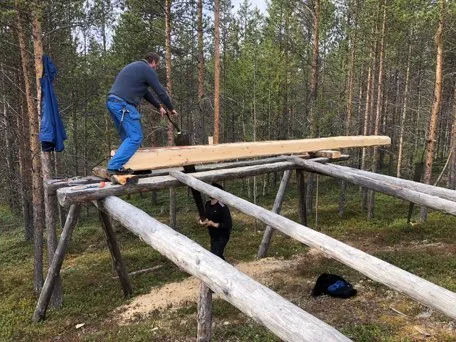
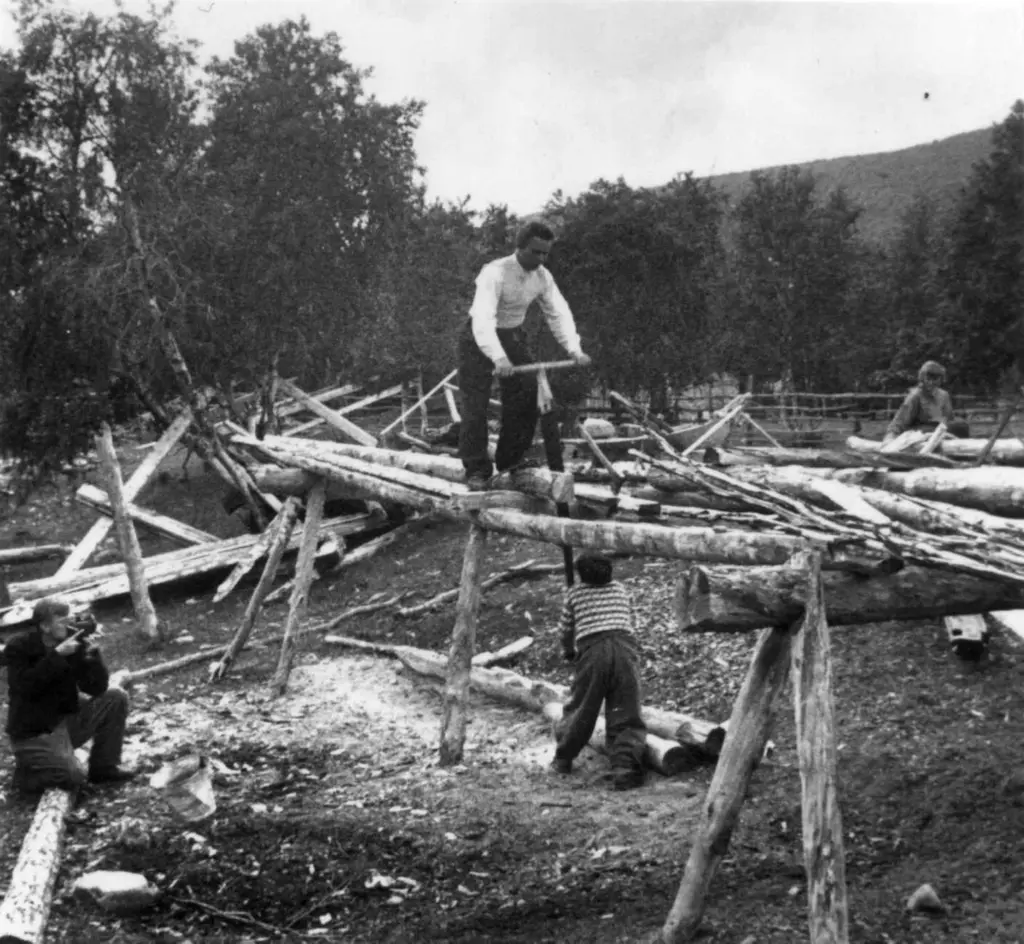
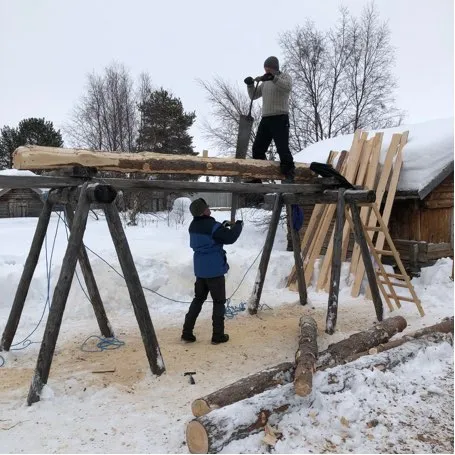
During the years 2006 and 2007 the roof of Jávrebainjárga cottage was restored. In summer 2006 two wooden saw stations were builtfor the purpose of the restoration.
This project was undertaken by Ronald Renmælmo, Siv Holmin, Per Erik Tretnes and museum technician Thorolf Bjørnbac
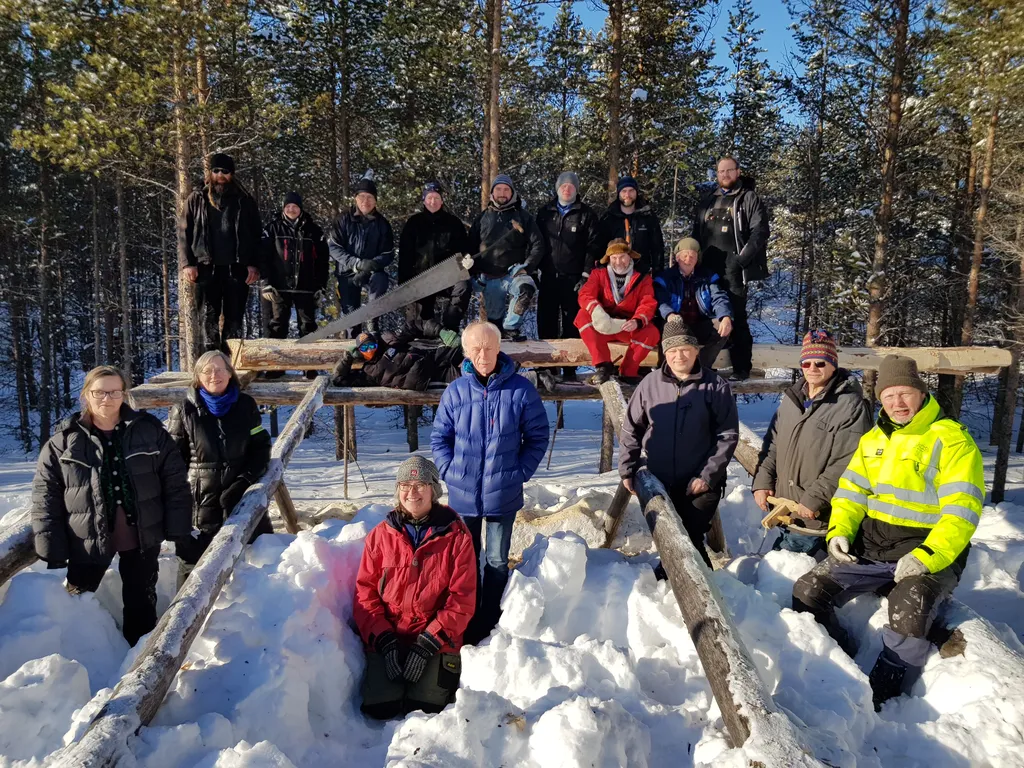
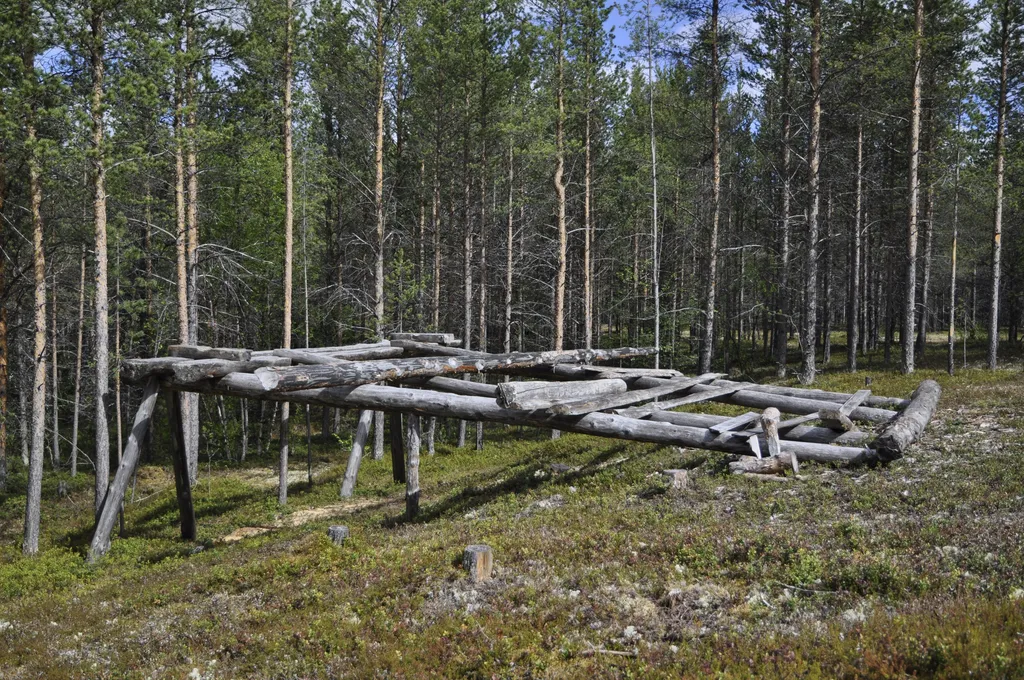
Pine, timber and planks were sawn using traditional techniques at these saw stations. It is convenient and practical when two persons are able to saw together using two-man cross-cut saw.