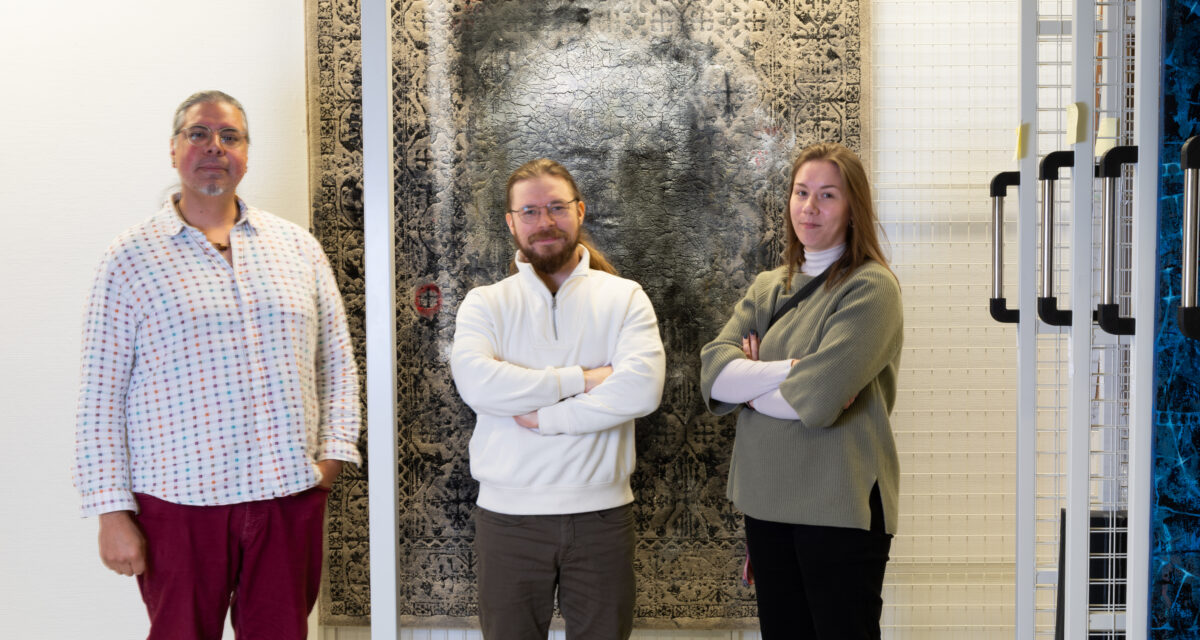
Sámi Dáiddamagasiidna has a new team. This presentation offers an introduction to the department, the history of the collection, and its work to manage, develop, and disseminate dáidda and duodji. It also presents Head of Department Per Asle Sara, Collections Manager Ulrikke Marie Strandli, and Curator Pablo N. Barrera, their backgrounds and professional interests, and their work within the department.
About the Sámi Art Collection and the Team
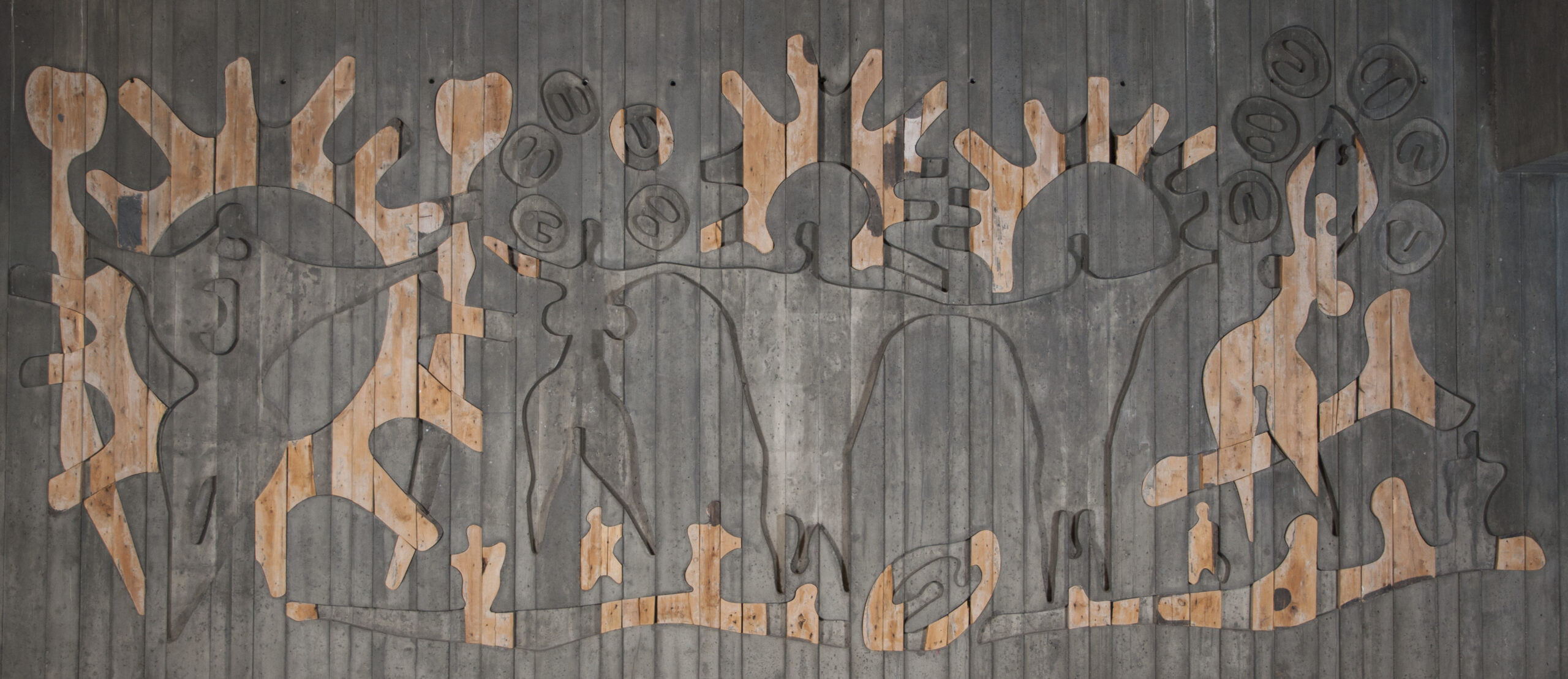
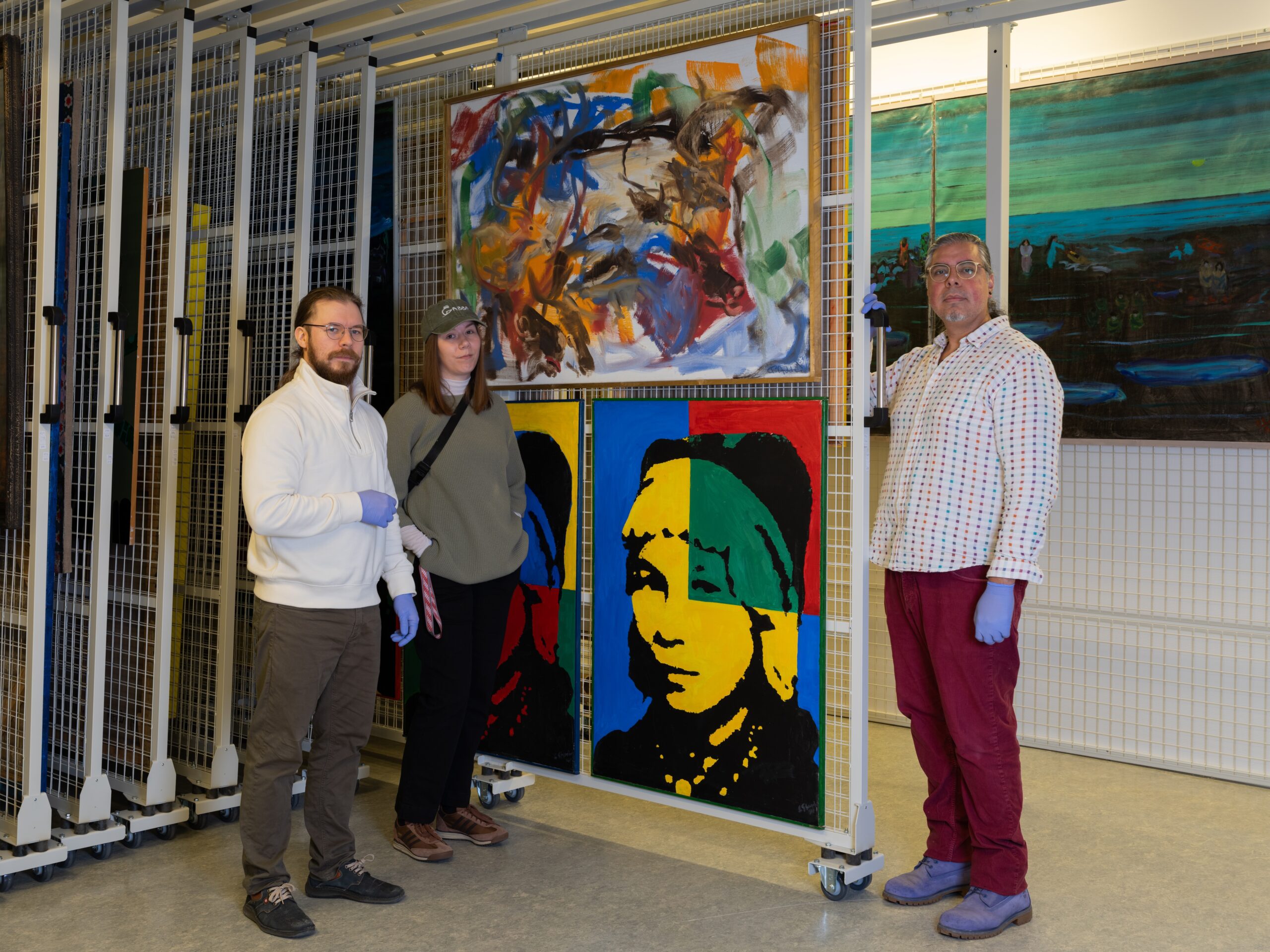
RiddoDuottarMuseat manages one of the world’s largest collections of dáidda (Sámi contemporary art) and dáiddaduodji (artistic heritage crafts) at Sámi Dáiddamagasiidna (Sámi Art Collections). The department is responsible for the stewardship of approximately 1600 works representing over 250 artists active from the 1800s to the present. The collection provides access to artworks across a wide range of mediums illuminating significant periods of Sámi art history. As an Indigenous-led institution, Sámi Dáiddamagasiidna advances the vision set by its founding Sámi artist and community leaders to expand capacity for intergenerational exchange of artistic and cultural knowledge.
HISTORY
Sámi Dáiddamagasiidna has its roots in the development of the Sámi art field. The collection originates from the establishment of Sámiid Vuorká-Dávvirat / Sámi Museum in 1972 as both the first Sámi cultural institution in Norway and the foundation of the RiddoDuottarMuseat consortium of museums. From the beginning, the Sámi art collection benefited from Arts Council Norway support to acquire mainly duodji works. However, the collection also began acquiring works from artists who would establish the influential Sámi Dáidujoavku (SDJ – Sámi Artists’ Group) in 1978 and later form Sámi Dáiddačehpiid Searvi (SDS – The Sámi Artists’ Union) in 1979. These contemporary artworks by members of Sámi Dáidujoavku were the first acquisitions purchased directly by the museum, broadening the collection’s scope and commitment to Sámi artists.
The relationship between the collections department and Sámi artists laid an important foundation for the visibility and institutionalization of Sámi art. To this day, the collections department maintains a spirit of collaboration with local art spaces, including Sámi Dáiddaguovddáš (SDG – Sámi Center for Contemporary Art), established in 1989 as part of the legacy of Sámi Dáidujoavku.
Over time, the art collections department became a separate unit, initially through a three-year project position from 1998 to 2001. In 2002, it was formalized as a core department responsible for managing the rapidly expanding collection. Today, Sámi Dáiddamagasiidna consists of three staff members—the head of department, collection manager, and curator—as it prepares for the long-anticipated establishment of a new Sámi Art Museum.
The team consists of professionals with expertise in art and culture, including art history and curatorial practice. They work to promote Sámi art—duodji and dáidda—through exhibitions, events, digital platforms, and by making the collection accessible for research, publications, and loans to local, national, and international exhibitions.
TEAM
Per Asle Sara is the head of the Sámi Dáiddamagasiidna – RiddoDuottarMuseat department. He has a strong professional interest in how art can function as an expression of identity, belonging and resistance, especially within visual art in a Sámi context. He is particularly interested in how visual expressions can contribute to increased awareness of social and political issues, with a special focus on Sámi, political contemporary art.
Per holds a master’s degree in art history from UiT The Arctic University of Norway. Through work in museums, exhibitions and various projects, he has years of experience as an advisor, panelist, mediator, writer of art communication texts, editor, spokesperson, co-curator and exhibition organizer. Among other projects, he has worked as co-curator for the exhibition Visualizing Arctic Voices at the Center for Northern Peoples, translated the associated exhibition catalog into Northern Sámi, and served as advisor and text contributor for The Land Has a Mind to Speak and Sámi Horizons at MARKK in Hamburg. Recently, he has organized the Sami Parliament’s purchasing exhibition Áigegovat in collaboration with the Sami Parliament’s purchasing committee and Sámi Dáiddaguovddáš.
Per Asle grew up in Kárášjohka and comes from a Sámi reindeer herding family. He also has an art education from the Karasjok Art School, where he was among the first cohort of students. In addition to his role as department head, he also works as an illustrative artist.
Ulrikke Marie Strandli is a collections manager at the Sámi Dáiddamagasiidna – RiddoDuottarMuseat. Her areas of interest include how duodji and dáidda can provide new and expanded perspectives on Sámi history, culture, and society, as well as strengthen identity and cohesion in Sápmi over time.
Ulrikke holds a master’s degree in art history from UiT The Arctic University of Norway. In her master’s project, she worked with coastal Sámi cultural heritage and examined how museums and collections have contributed to shaping knowledge and narratives about Sámi communities. This has given her a particular awareness of the importance of insider perspectives in the management and dissemination of Sámi art and culture. Through her studies and project work, she has gained experience in exhibition development and the communication of Indigenous art. She is affiliated with the research group Arctic Voices and has contributed to the exhibitions Visualizing Arctic Voices at the Dávvi Álbmogiid Guovddáš / Centre for Northern Peoples, and Stories from the Arctic Contact Zone, which was shown at the Arctic Youth Conference in 2025.
Ulrikke was born and raised in Romsa / Tromsø, with a coastal Sámi background and a strong connection to Skárfvággi / Skardalen in Gáivuotna / Kåfjord and Ákšovuotna / Oksfjord in Ráisa / Nordreisa in Northern Troms.
Pablo N. Barrera joins RiddoDuottarMuseat as the inaugural curator of the Sámi Dáiddamagasiidna /Sámi Art Collections Department. Pablo brings over fifteen years of experience collaborating with local art communities to produce exhibitions and apply innovative strategies supporting formal and informal learning of Indigenous art. His research focuses on Indigenous artists operating within the context of global Indigenous movements and colonial organizational structures. He is committed to mentoring the next generation of Indigenous curators and to raising public awareness of the invaluable role that Indigenous artistic perspectives contribute toward globalizing art history.
Pablo holds master’s degrees in art history from Yale University and Harvard University, and a bachelor’s degree in the History of Art from the University of Pennsylvania. Prior to arriving in Sápmi, he served as Associate Curator at Oklahoma Contemporary Arts Center, where he organized over 40 exhibitions in a region representing 38 federally recognized tribal nations, curating major solo, group, retrospective, survey, and public art exhibitions. In addition to his professional experience in the museum and heritage sectors, Pablo has juried international survey exhibitions, given lectures and presentations across three continents, and been invited as guest curator for landmark exhibitions in the Southwestern United States region. He has also independently curated shows in London, Seoul, and New York, and held research and advisory committee positions for institutions including the Fulbright Fellowship, the Getty Foundation, the National Endowment for the Arts, and various artist-in-residence programs.
Pablo has written on the artistic representation of cultures that experienced colonization, including exhibition catalogue essays, a paper on Mesoamerican art production as part of the Columbian Exchange between Colonial Spain and East Asia (National Museum of the American Indian, Smithsonian Institute) and a co-authored chapter on Korean vernacular architectural heritage (Springer International). He was born in Chicago to immigrant parents; his father is a member of a Wixáritari Indigenous community in Jalisco, Mexico, where Pablo spent his formative years.
MISSION
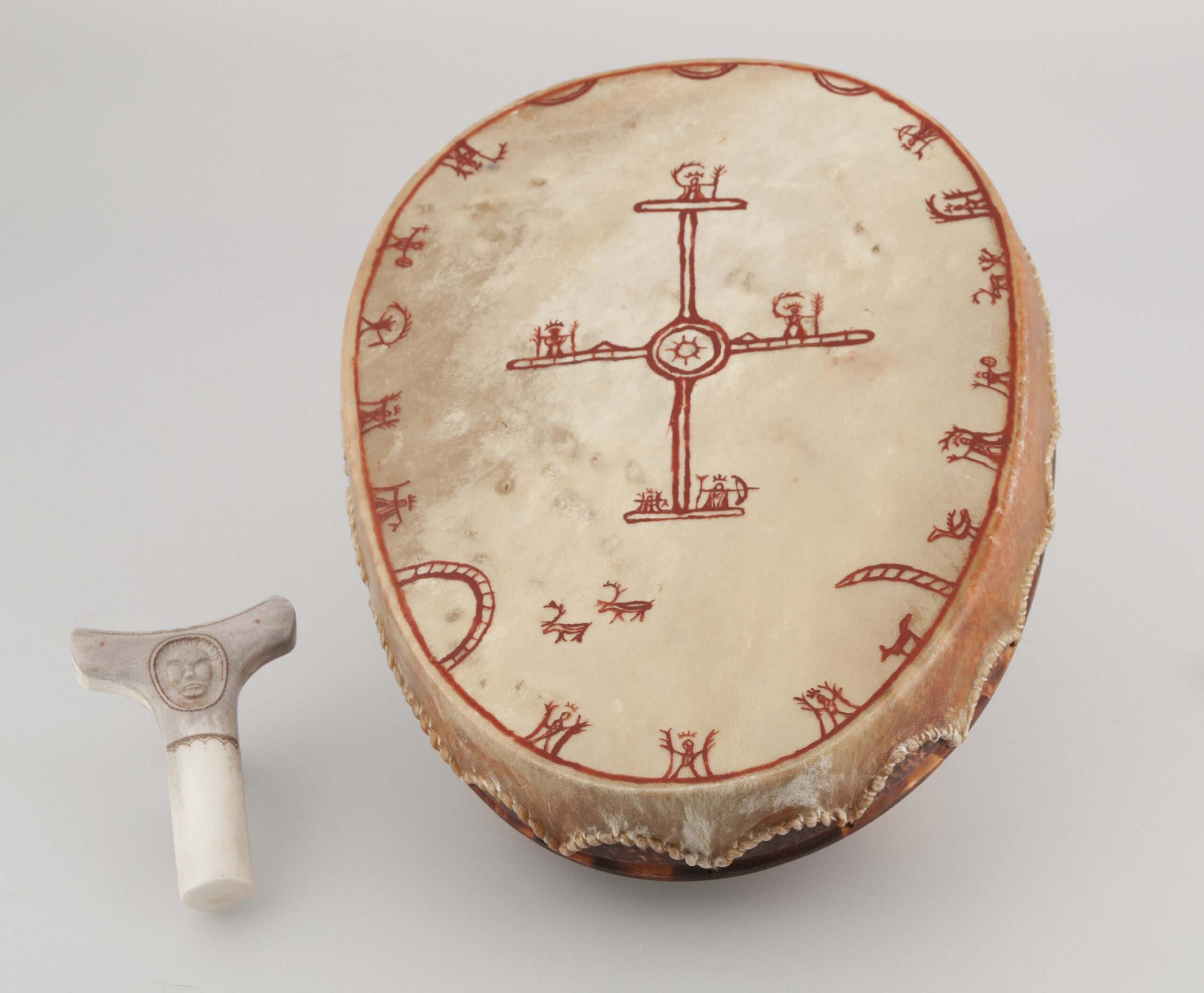
The dissemination of dáidda (Sámi contemporary art) and dáiddaduodji (artistic heritage craft) is central to the department’s mission. Dissemination takes place through research access, publications, and the lending of works for local, national, and international exhibitions.
Sámi Dáiddamagasiidna holds a central role in facilitating access to the collection while the museum is closed in preparation for new construction. The department hosts visiting scholars and community members wishing to study archival materials by appointment. Artworks will continue to be regularly exhibited at the Sámediggi /Sámi Parliament in Karasjok. Works from the collection can also be seen at RiddoDuottarMuseat’s institutions throughout Finnmark county, including Porsáŋggu musea/Porsanger museum’s Art Arena in Lakselv and Guovdageainnu gilišillju/Kautokeino Municipal Museum. Works and archival materials are also made available toward disseminating projects at collaborating institutions, such as universities and the DigitaltMuseum where Sámi Dáiddamagasiidna publishes a rotating selection of 50 artworks every year as part of a common database for Norwegian and Swedish museums and collections.
ACQUISITIONS

Over time, the collection has evolved to encompass a wide range of artistic expressions. Acquisition schemes crucial to building the collection were initially through Arts Council Norway and later transferred to the Sámi Parliament in 1992.
Today, Sámi Dáiddamagasiidna administers yearly additions purchased through the Sámi Parliament’s art purchasing scheme: a committee hired at two-year intervals by the Sámi Parliament. The committee consists of four Sámi artists, two members, and two deputy members tasked with leading the purchasing of Sámi contemporary art and dáiddaduodji throughout Sápmi.